Synopsis of the Amorgos Oil Spill Tragedy
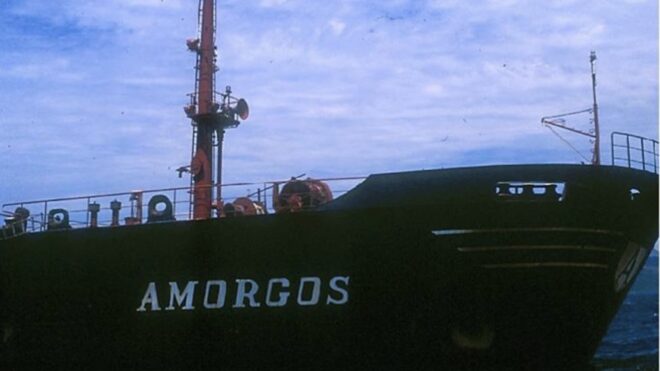
The “Amorgos,” a Greek freighter, ran aground and sank off the coast of Kenting, located at the southernmost tip of Taiwan, on January 14, 2001. The carrier was transporting approximately 60,000 tons of iron ore and an estimated 1,000 to 1,150 tons of fuel oil when it suffered an engine failure near Kenting National Park. The incident resulted in a significant oil spill, causing environmental concerns in the area.
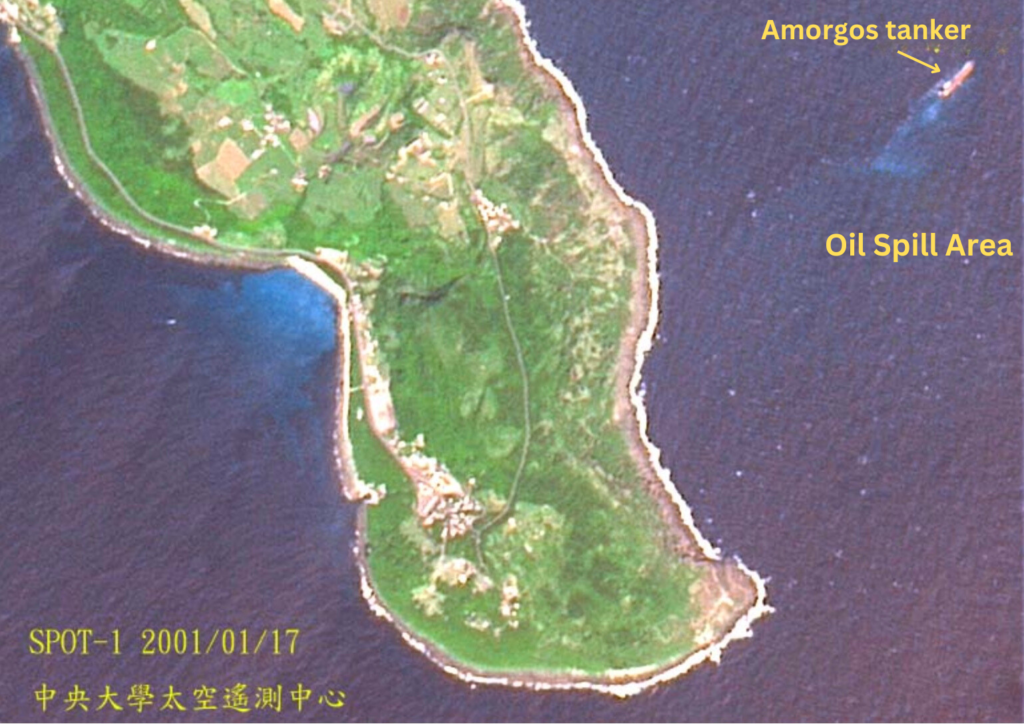
Sattelite image of Amorgos tanker incident place and oil spill area
10 facts about Amorgos Oil Spill Tragedy near Kenting
- Date and Location: The Amorgos oil spill tragedy occurred on January 14, 2001, near the Kenting National Park in Taiwan.
- Origin and Destination: The Greek cargo ship, Amorgos (Αμοργός), was transporting mineral sand from India to mainland China.
- Magnitude: The ship had a capacity of 35,000 tons, and approximately 1,300 tons of fuel oil leaked from the Amorgos into the sea
- Loss of Power: While traversing the southern waters of Taiwan, the Amorgos lost its power and drifted for 12 hours before becoming stranded in the waters near Kenting.
- Rescue Operation: Taiwan’s Ministry of Transportation and Communications and the military rescue center initiated a rescue mission. All 25 crew onboard were safely rescued by 11 PM on the same day.
- Immediate Action: On January 15, the Hualien Port Authority established a disaster response center. They took measures to prevent an oil spill and called upon the ship’s owner and insurance company to address the situation promptly.
- The Oil Leak Begins: On January 18, the hull of the Amorgos ruptured, causing the ship to begin leaking oil.
- Legal Measures: Following the oil leak, Taiwan’s Environmental Protection Administration acted in line with the “Marine Pollution Prevention Act” passed in October 2000. They instructed the Hualien Port Authority to restrict all Amorgos crew members from leaving the country.
- Ecological Impact: The oil spill affected the Longkeng Ecological Protection Area within Kenting National Park, bringing ecological devastation to the protected region.
- Transnational Litigation: In 2003, Taiwan’s Environmental Protection Agency filed a compensation lawsuit in a Norwegian court, marking it as Taiwan’s first cross-national litigation related to an oil spill.
The detailed account of the Amorgos oil pollution incident in Kenting
The Greek cargo ship “Amorgos,” weighing 35,000 tons, was transporting 60,000 tons of ore sand from India to Nantong, Jiangsu, China.
As it sailed past the waters east of Eluanbi, it experienced a mechanical failure, losing its propulsion. On January 14, 2001, it drifted and ran aground about 800 meters off the Longkeng Ecological Protection Zone coast in Kenting National Park, at latitude 21°55′ N and longitude 120°52′ E.
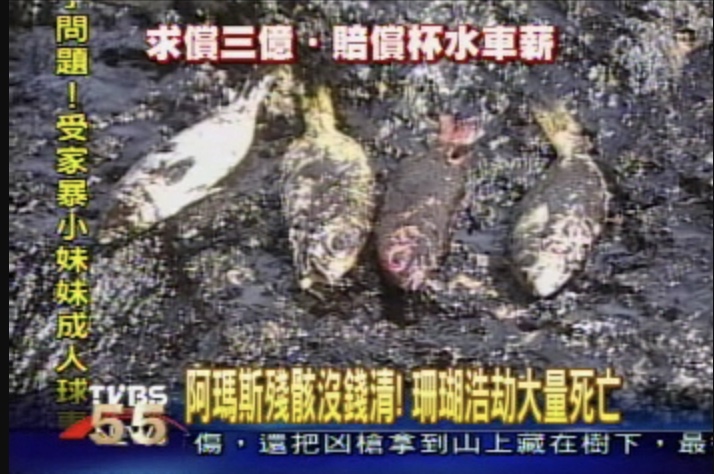
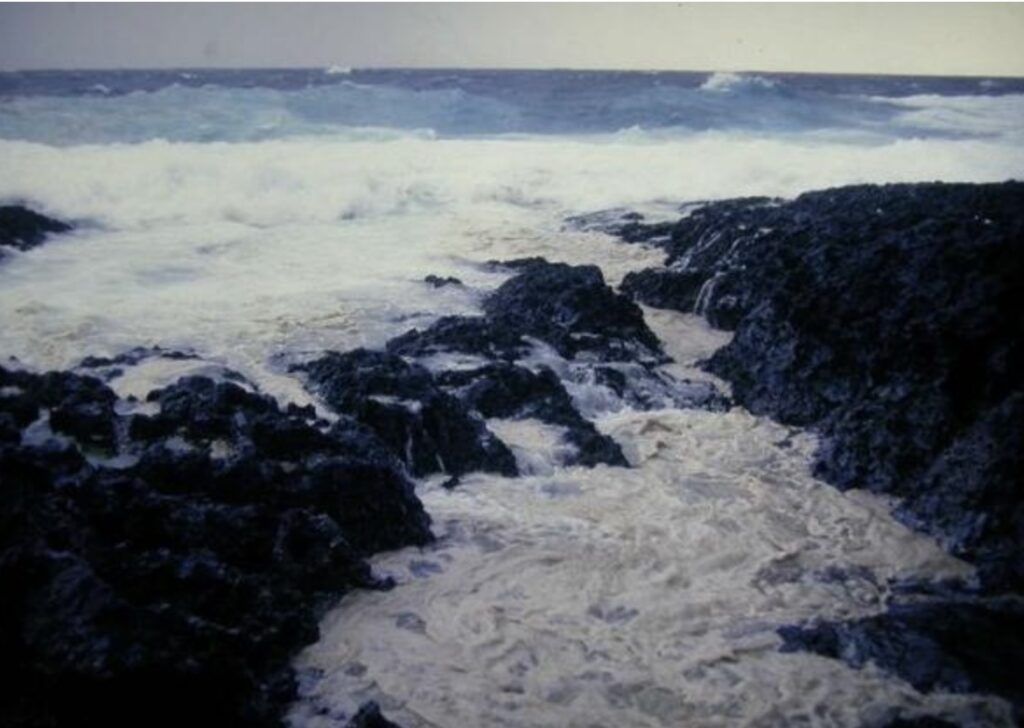
Due to hull damage, over 1,000 tons of heavy oil and more than 100 tons of diesel oil spilled. Influenced by the northeast monsoon and the unique terrain of the Longkeng area, the spilled oil rapidly flowed into the coral reef pits from Baisha Nose to the southernmost point of the Longkeng Ecological Protection Zone between January 18 and 19, 2001.
This pollution spanned an area approximately 3 kilometers in length and 10-30 meters in width, marking the largest oil spill in Taiwan, and largest ecological disaster in Kenting National Park area.
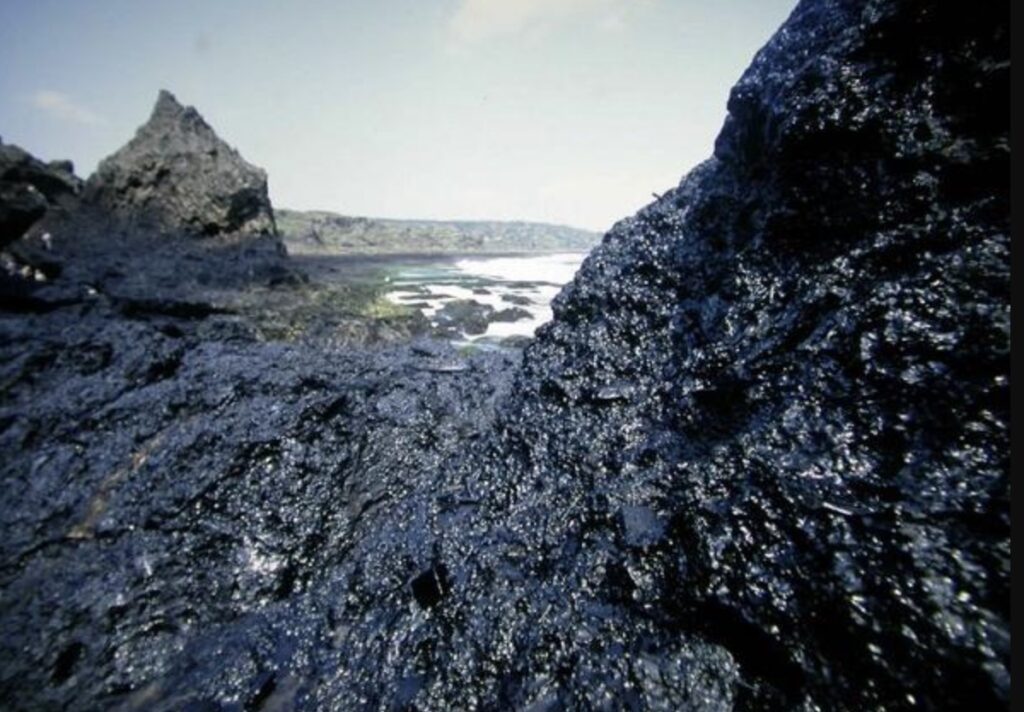
Oil pollution of the Longkeng landscape
When the incident occurred, all 25 crew members, including the captain, were safely rescued by Taiwan’s Coast Guard’s 14th Squadron. In response to the severe oil spill, especially during the Chinese New Year holiday when labor was scarce, the Executive Yuan established the “Amorgos Grounding Cross-Departmental Emergency Response Team” on February 7.
This team comprised members from various departments, including the Environmental Protection Administration, Coast Guard, Ministry of Transportation and Communications, Ministry of Defense, Ministry of the Interior, Council of Agriculture, Pingtung County Government, Hengchun Township Office, Kenting National Park Management Office, and Kenting Police Squad. Experts and scholars provided advice, and oil spill cleanup operations were initiated in phases.
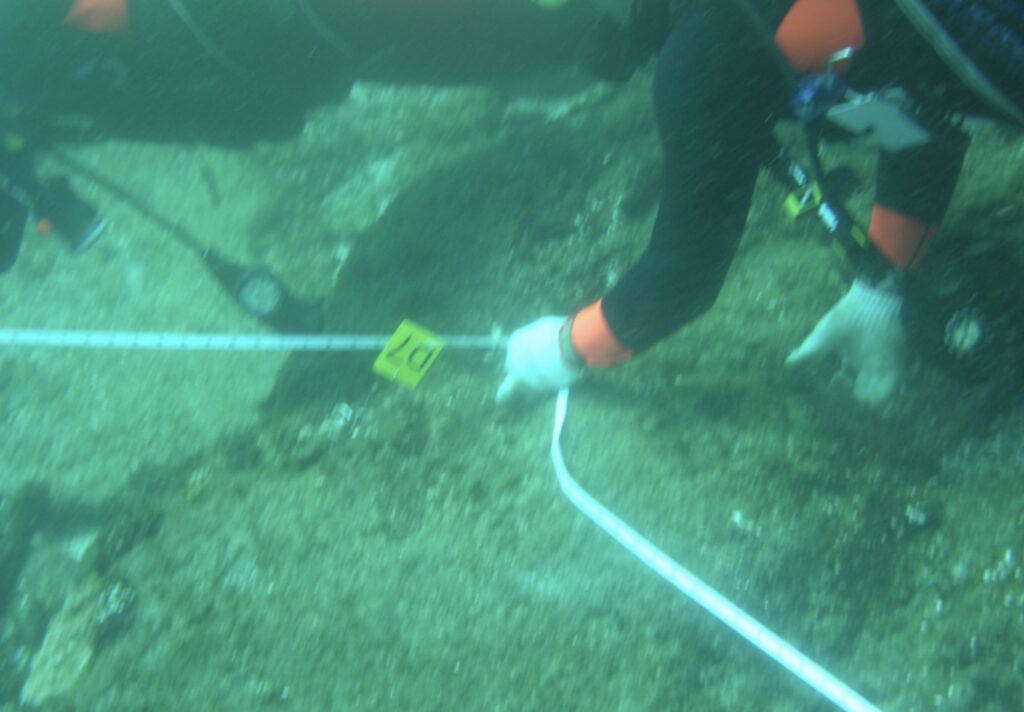
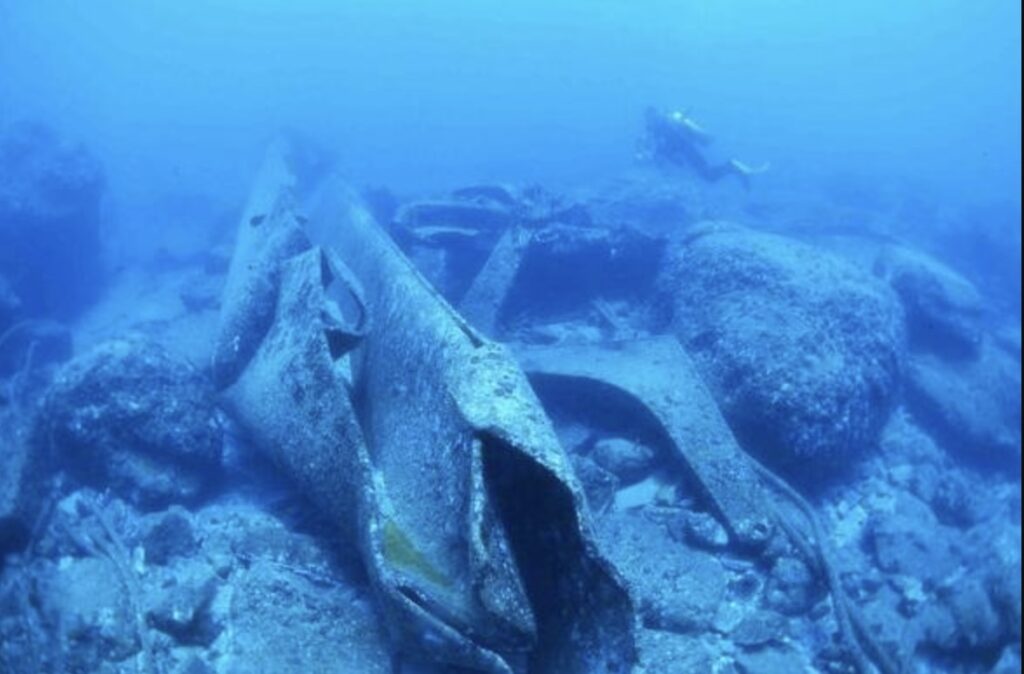
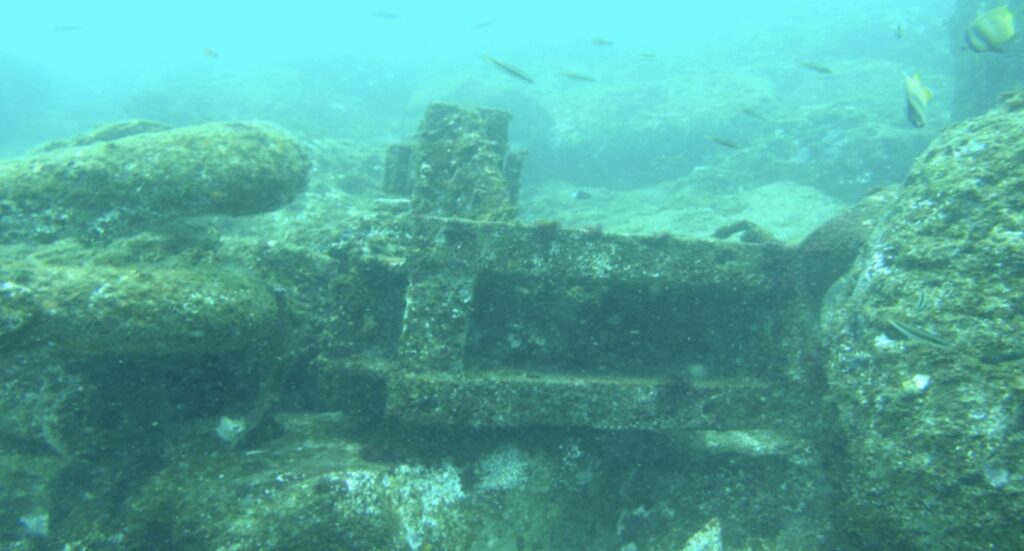
Divers inspecting the wreckage of Amorgos ship after it sinkage
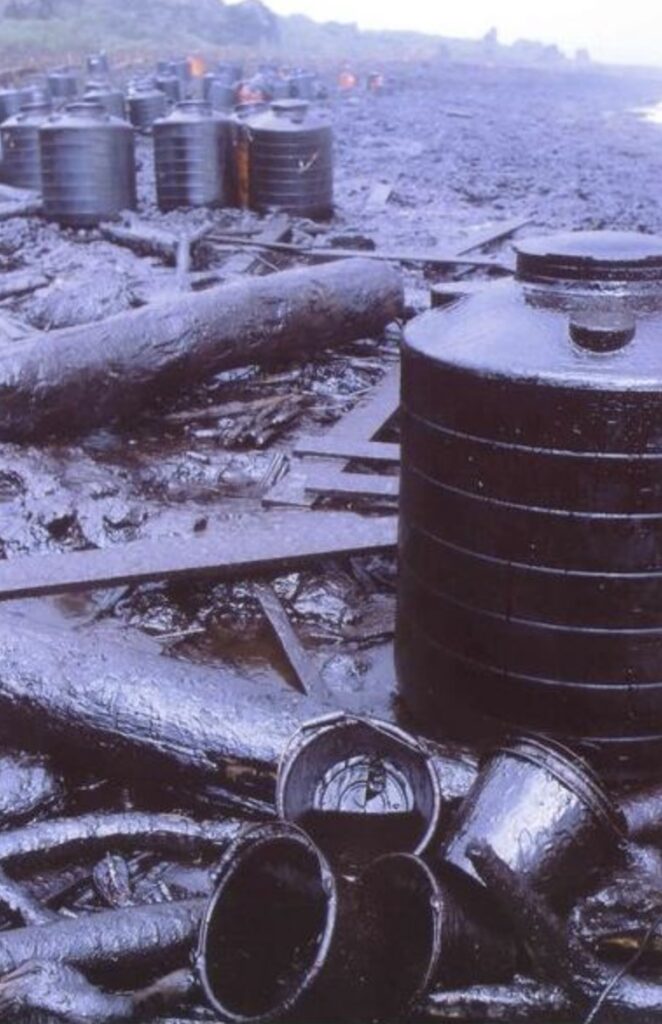
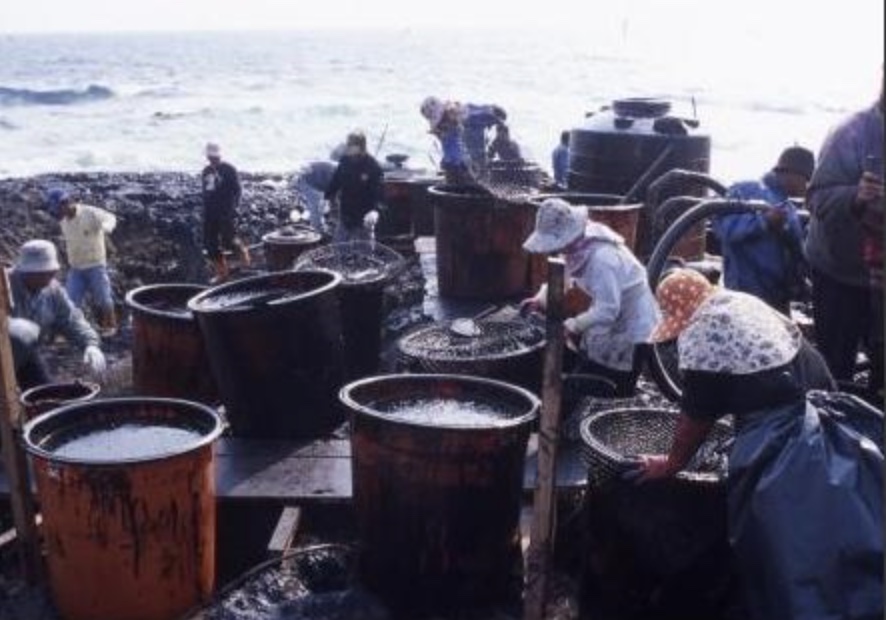
Cleaning efforts after the event
In the first phase of skimming floating oil: A total of 8,000 military personnel and shipowner-employed workers collectively removed 461 tons of oil, which was completed by February 16.
In the second cleanup phase, shipowner-employed workers removed the previously skimmed oil pollution and polluted driftwood, transferring them to the state oil company and incinerators for treatment. They also cleaned the oil pollution on the reefs.
The former task was completed on March 24, with a total of 21,560 workers mobilized, removing 513 tons of oil pollution and 2071 cubic meters of driftwood.
Oil on the reefs and intertidal zones was allowed to naturally decompose to avoid damaging marine ecology and ensure worker safety. Areas above the intertidal zone were cleaned with water jets.
By the end of June of 2001, the cleanup was completed, showing positive results.
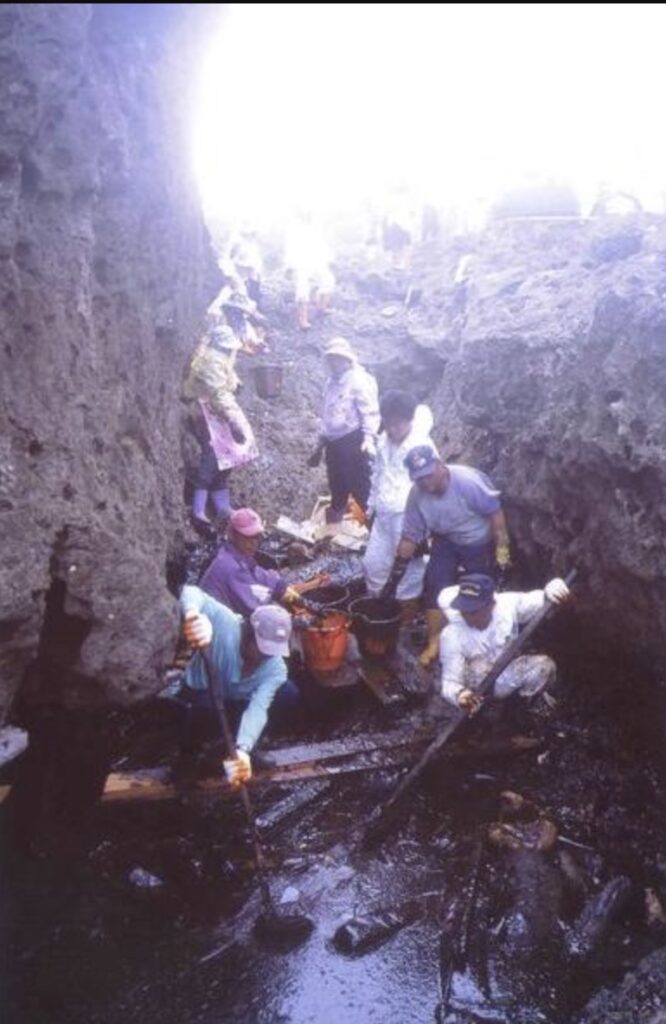
Oil spill cleaning efforts in Longkeng
The remaining oil and ore sand on the ship were dealt with by the shipowner. The residual oil was sent to the state oil company for processing, and the ore sand was dumped in waters deeper than 1,000 meters. This too was completed by the end of June.
However, due to multiple typhoons, the ship could not be refloated and towed to sea for disposal. It broke apart on-site due to typhoon impact. The Ministry of Transportation and Communications continued the removal process.
Assessment of Economic Losses
In terms of tourism resources, the pollution from the oil spill has damaged the local coastline and nearby marine areas, leading to the destruction of scenic views and a decrease in marine recreational activities for the public.
This has resulted in a decline in the development of the tourism industry in the neighboring areas, causing losses. In the fisheries sector, due to the harm inflicted on flora and fauna, leaving them with no habitat, there has been a relative decrease in coastal fishery products.
Regarding tax revenue losses, the court believes that the revenue of the Marine Museum should be taken into account since its revenue is an essential part of the Kenting National Park.
If the income and tax amounts of the Marine Museum are considered, the tax revenue of the area in 2001 actually increased compared to 2000. Therefore, there is no evidence to show that the Amorgos oil spill resulted in a loss of national tax revenue.
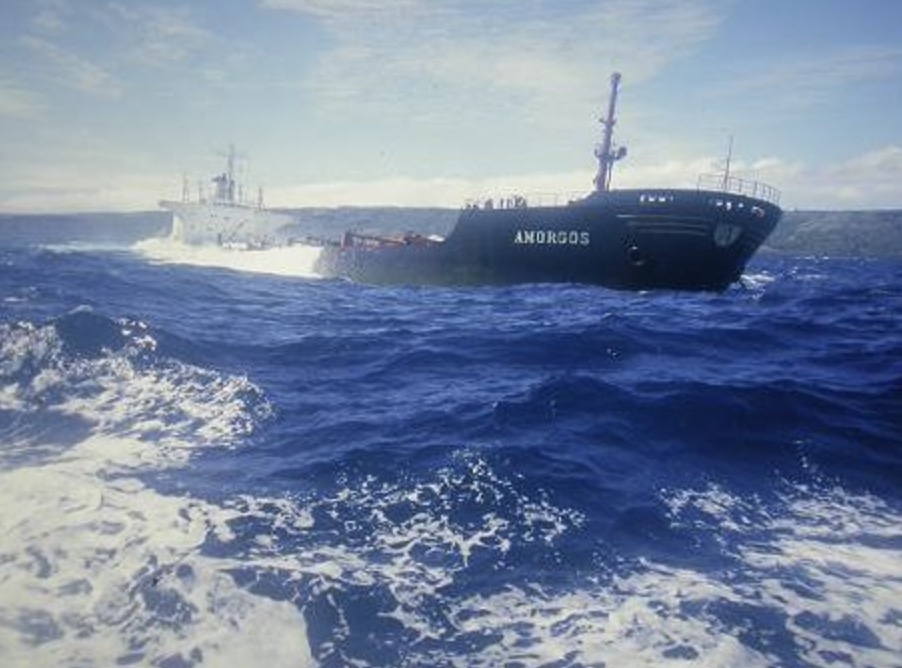
Compensation Efficiency and Problems
The government departments spent over 90 million yuan on oil spill cleanup, but the ship owner’s insurance company only compensated a little over 60 million yuan.
For the second phase of compensation, such as losses caused by marine pollution to the ecological environment, economic losses in the Hengchun fishing industry, a fine of 150 million yuan imposed by the Pingtung County Environmental Protection Bureau, and the ecological restoration and monitoring costs of the polluted areas in Kenting Longkeng, the negotiation progress has been very slow due to the lack of environmental survey records from before Longkeng was polluted.
Two years later, the crisis beneath the waters of Longkeng still hasn’t fully disappeared.
Regarding the direct right to sue the ship owner’s liability insurer, although Taiwan country’s Marine Pollution Control Act provides for direct claims against the liability insurer of the polluting vessel, the same consideration must be given to whether Norwegian law has a similar provision when dealing with maritime lawsuits abroad.
According to Article 15-20 of the Norwegian Insurance Law, the liability insurer is not required to assume any responsibility before the insured compensates the injured third party.
According to Norwegian law, Taiwan cannot make direct claims against Norwegian liability insurers. In this situation, the Environmental Protection Agency would have to file an international lawsuit, which could be immediately dismissed, let alone win the case.
Environmental Status After the Pollution Incident
The shipwreck has become an artificial reef, and the coral reefs have recovered well, with a coverage rate reaching 30%. From regular tracking of specific large debris, it’s observed that there are annual changes, but the changes are not too drastic.
These remains have the effect of artificial reefs. Because this area has a stepped seabed and the current is very strong, regular fish species don’t typically live here. However, the debris provides some barriers, as if shelters were built for them.
The results of this are both good and bad.
Many corals have grown on it, and a lot of mineral sands have also accumulated. After the mineral sands oxidize, they agglomerate, forming a hard protective layer, so they are not disturbed. The conditions in which organisms inhabit there also prove that there hasn’t been any toxic pollution.
From regular monitoring, the coverage rate of reef-building corals in that area is around 30%, fluctuating between 22% to 29%. In 2001, the debris was close to the shore and due to large waves and continuous collisions, like metal sheets constantly rubbing, it caused significant damage. In 2002, what we saw was still barren, mainly composed of mud and algae. By 2006, small corals began to grow noticeably.
Young coral seedlings take a relatively long time to grow back. By 2007, the coral coverage rate had already reached about 20%. By 2010, many corals had grown in the same place, and it has now returned to its original state. It’s estimated internationally that such damage would take decades to recover, but in Longkeng, it took only about five years for the coral ecosystem to return to its original state. This is a very rare scenario internationally.
This area is home to a wealth of valuable subtropical marine life, including a large amount of coral reefs. At the time, the oil spill was not promptly addressed, leading to a vast amount of oil covering the surface of nearby waters.
This severely blocked the sunlight absorption of the corals, resulting in widespread coral bleaching. Due to natural forces, this area is gradually recovering, but the current growth rate is not very promising.
Conclusions on the Amorgos Ship Oil Spill Incident
Amorgos incident exposed the government’s long-term neglect of the systems, equipment, and personnel required for responding to marine pollution. However, it also expedited the creation of related response mechanisms. For example, in the following year, May and July of 1991, incidents involving a Liberian oil tanker and a Panamanian Orpheus oil tanker, both losing power and totaling 249,000 tons of crude oil, occurred in Taiwan’s territorial waters. The “Executive Yuan’s Special Task Force on Major Marine Pollution Incidents” was able to timely prevent significant marine pollution events in our waters.
The government’s emergency response system has been able to function promptly after the Amorgos ship pollution incident. In conclusion, this oil spill incident highlighted significant blind spots in the government system, particularly the lack of emergency response and crisis management capabilities.
It failed to control the situation immediately after the disaster struck. Promoting domestic mechanisms for handling major marine pollution is essential to ensure that our country’s precious environmental resources are not again subjected to similar disasters, and national resources can achieve sustainable development.