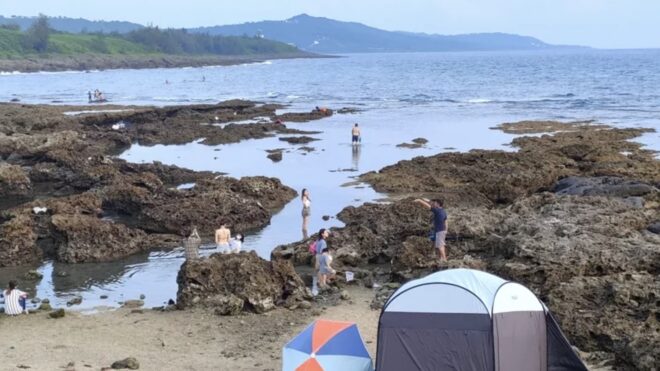
Wanlitong is located in Hengchun Township, Pingtung County, Taiwan, and is part of the Kenting National Park. It is renowned as one of the premier scuba diving and snorkeling spots in Taiwan.
The area boasts a rich marine ecosystem, with various types of coral reefs spread throughout the coast, making it home to many local sea creatures. Additionally, Wanlitong Beach is known for offering some of the best snorkeling experiences in Kenting National Park. Due to its ecological significance, the region has been designated as an Ecology Preservation Zone in Kenting.

Typical Day in Wanlitong – snorkeling group in Taiwan
The coastal coral and intertidal zone ecology of Kenting National Park attract tourists for exploration. The Wanlitong marine area was originally a special scenic area. However, the intertidal zone ecology and coral species have severely declined due to human trampling, capturing, and wastewater discharge. Over four years ago, the Kenting National Park Management Office announced that the 1-kilometer northern marine area would be a restricted ecological protection zone.
Human trampling on coral reefs refers to the physical damage caused by humans walking, standing, or inadvertently stepping on coral reefs, especially during activities like snorkeling or diving. Such trampling can lead to significant harm to the fragile coral structures. While gross interference by humans, such as mining and dredging, can lead to major changes in coral reefs, even seemingly minor actions like trampling can have detrimental effects on these delicate marine ecosystems.
However, scholars have observed that the control measures are lax, and wastewater continues to be discharged, making recovery less than ideal. The Kenting Management Office stated that after the recent formation of the community ecological patrol team, there will be strict controls through patrols and inspections. The county government is currently planning and designing the wastewater treatment facility.
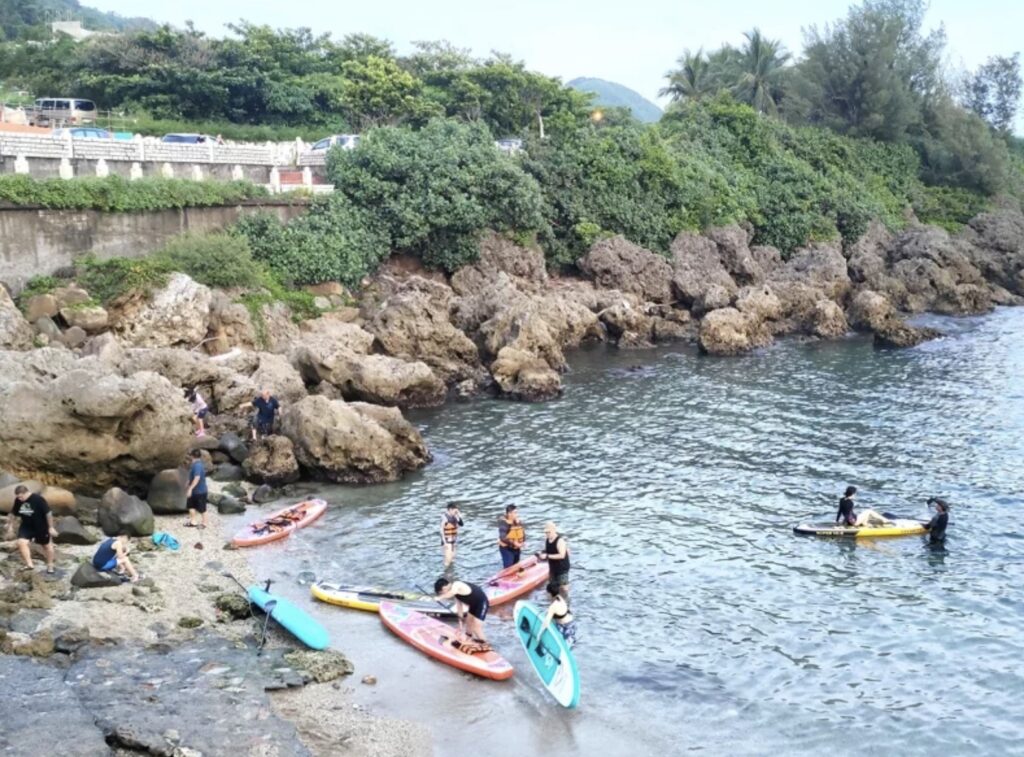
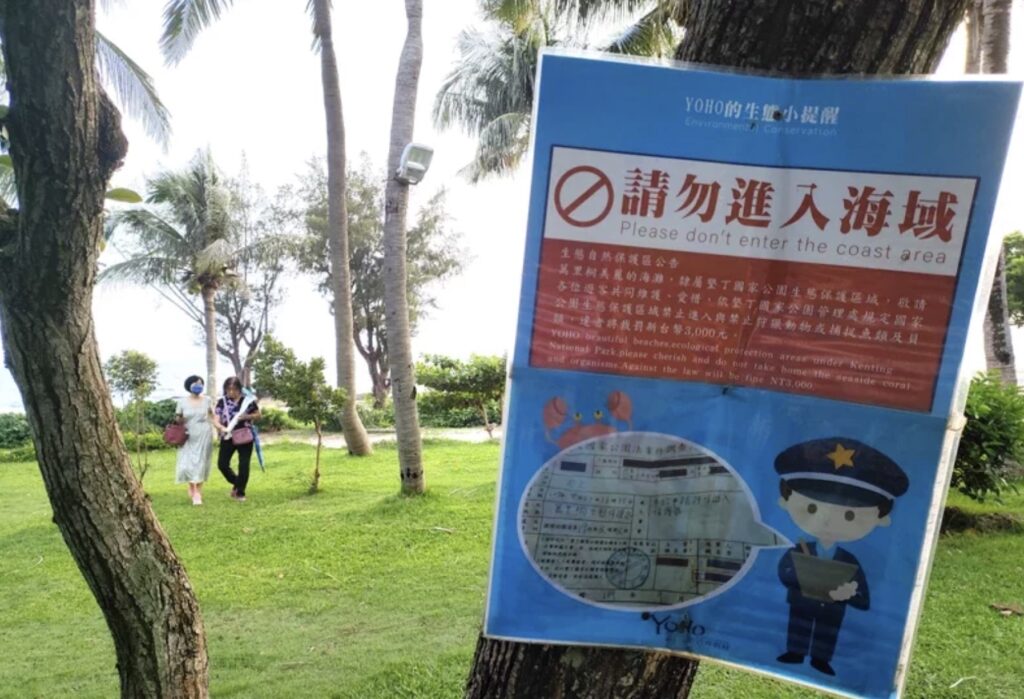
The Wanlitong marine area of Kenting National Park is located on the west coast, near the Shanhai Village in Hengchun Township to the south. To the south is an underwater park for water activities and diving, while to the north, it stretches for about 1 kilometer. In the past, this area was a special scenic zone freely accessible from the Yoho Beach Resort. However, now see what sign there is just within the territory of Yoho Beach Resort:
However, long-term investigations by marine ecologists have found that due to human recreational pressures and the discharge of domestic wastewater into the sea, the intertidal and coral ecosystems are showing signs of decline or even disappearance.
\The situation has raised alarms. Chen Jhao-lun 陳昭倫, a researcher at the Biodiversity Research Center of the Academia Sinica, even lamented, ‘Even if we close it off for 30 years for restoration, it might not return to its original state’.
This is one of the live Kenting cameras in the Wanlitong snorkeling beach area, where these activities are still allowed.
In response to scholars’ warnings, the Kenting National Park Management Office, during the 4th comprehensive review of the Kenting National Park plan, adjusted the area to the highest level of ecological protection.
By the end of 2108, it was announced that, according to the National Park Act, one needs permission to enter the area. Fishing and shellfish harvesting are prohibited, with violators facing a fine of 3,000 TWD. (a meager fine in my opinion; as we can see, it did not stop a giant clam stolen earlier this year in the Houbihu area). Or this giant trevally, which also lost its life to illegal fishing.
Dr. Fan Tung-yun 樊同雲, a coral ecology researcher at the Marine Museum, found that after strengthening protection measures in the Wanlitong marine area, the coral reef ecosystem, which had previously declined to a coverage rate of less than 20%, has not shown ideal recovery in recent years.

Wanlitong Marine Protection area is seen behind the Yoho Beach Resort Lazy Liver playground area.
Fan Tung-yun stated that the decline of the intertidal and coral ecosystems in Wanlitong is due to the compounded damage caused by human recreation and the discharge of domestic wastewater from land sources. Even after the area was designated as an ecological protection zone, tourists can still be seen trampling in the intertidal zones or playing in the water.
While the local resort has set up wastewater treatment facilities that meet the discharge water standards, the community has not. The nutrients in the wastewater lead to water eutrophication, continuously impacting the coral reef ecosystem. The damage, accumulated over the years, is still ongoing. He hopes for the effective implementation of recreational controls and the establishment of wastewater treatment facilities.

Similarly, as some scientists like to call “beautiful mistake of nature” due to the phenomena of eutrophication taking place on nearby Houwan Beach. You can read more about this here.
Eutrophication is a process in which water bodies, such as lakes, rivers, or coastal areas, receive an excess of nutrients, primarily nitrogen and phosphorus, often due to runoff from the land. This surplus of nutrients can stimulate the excessive growth of algae and other aquatic plants.
The Kenting Management Office stated that it is not feasible to set up barriers to close off the Wanlitong Ecological Protection Area coastline. The office has erected large signboards, and the resorts have also placed signs at the entrances and exits of the coast to remind tourists not to enter.
Regarding control measures, the office has assisted in establishing the Wanlitong Community Ecological Patrol Team, which was officially inaugurated on a Sunday.
In addition to assisting with ecological surveys, the patrol team also controls access, using both persuasion and enforcement. As for wastewater, the county government has planned to set up a small wastewater treatment facility locally and is seeking funding from the central government.