
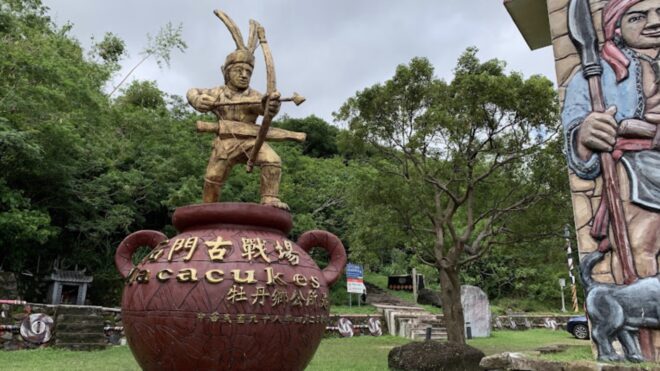
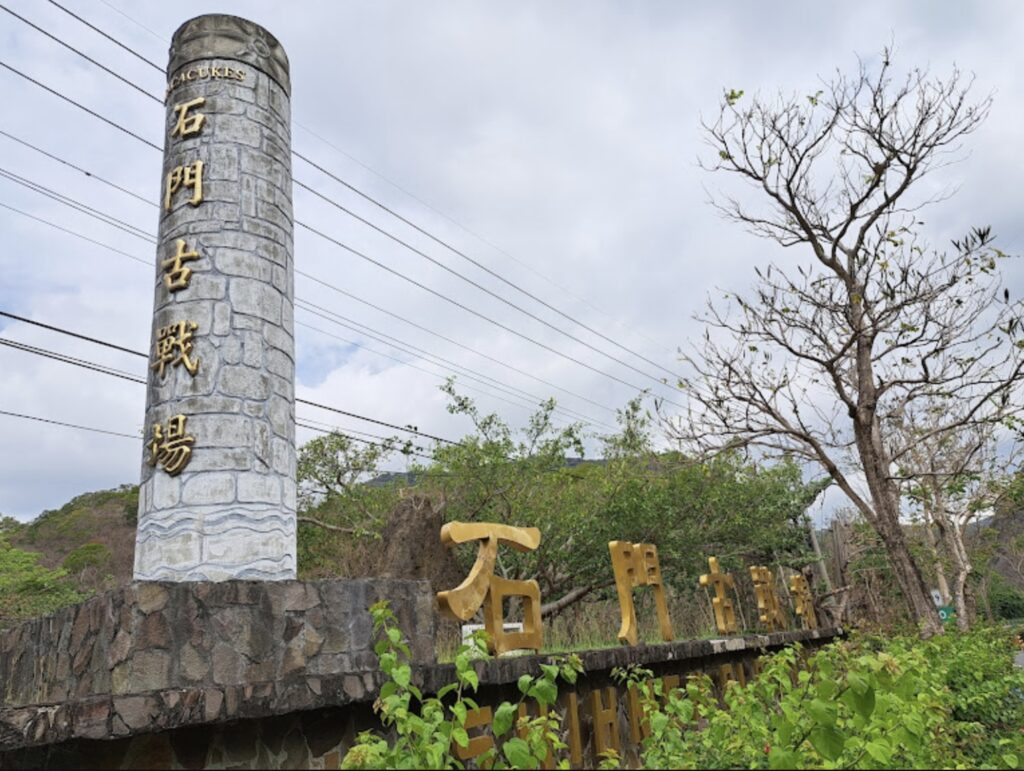
The Shimen Ancient Battlefield (in Paiwan language: Macacukes) is the location where the Mudan Incident in Taiwan took place. It is situated at the border of Mudan Township and Checheng Township in Pingtung County, approximately 3 kilometers to the northeast of Sichongxi. It is also one of the historical attractions near the Kenting National Park area today.

The Shimen Mountain Valley located next to the ancient battlefield is a type of pass fortress.
Entering Mudan Township along County Road 199, the magnificent Shimen Gorge immediately comes into view. The natural barrier between the two facing mountains of Shimen is called “macacukes” in the Paiwan language, which implies mutual support and also conveys the meaning of resisting foreign aggression.
Shimen Battlefield, with its majestic mountains and strategic terrain, is named for the cliffs formed by the juxtaposition of Shimen Mountain on the north side and Wuchongxi Mountain on the south side, which resemble a gate, hence the name Shimen. This is the ancient battlefield where the indigenous people of Mudan and Gao’s villages resisted the invasion of the Japanese army, marking the famous “Mudan Incident” in Taiwan’s modern history.
Background of Mudan Incident
The roots of the Mudan Incident can be traced back to a shipwreck that took place in 1871 when a group of fishermen from the Ryukyu Islands (which is now a part of Japan) were shipwrecked on the southern coast of Taiwan. Some of these fishermen were killed by Paiwan aboriginals from the Mudan Village.
Japan demanded compensation from the Qing Dynasty (which had nominal sovereignty over Taiwan) but was rebuffed. The Qing government argued that they had limited control over the indigenous areas of Taiwan, and thus, were not responsible for the actions of the Paiwan tribe.
Conflict Unfolds
In 1874, using the incident as a pretext, Japan launched a punitive expedition to Taiwan. Their objective was to punish the tribes responsible and also to flex their growing military muscle in the region. At the time, the Ryukyu Kingdom was independent, but it paid tribute to both the Qing Dynasty and the Empire of Japan. As a result, the Japanese government dispatched troops to the incident site.
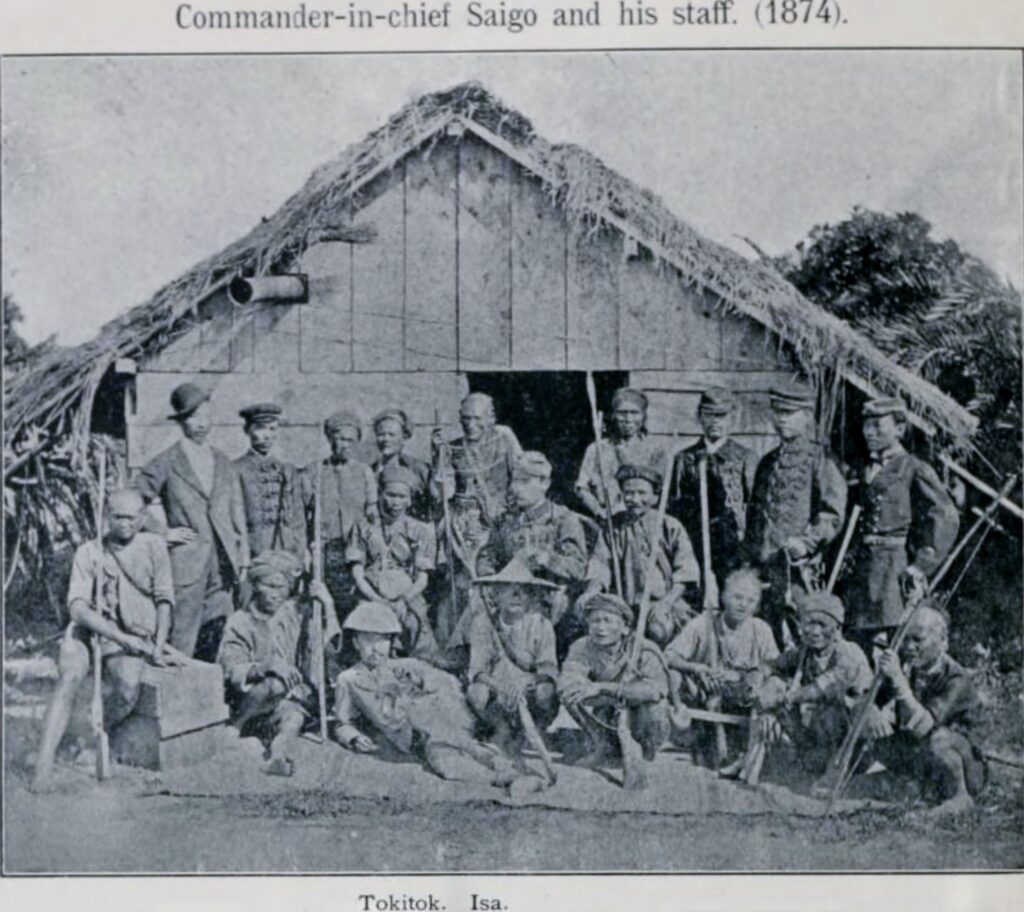
After the Shimen battle, the Japanese commander Saigo took a photo with the Paiwan tribal leader. The one sitting on the left is Zhu Lei, the son of Zhuo Qitu; the one in the middle is Saigo; the one on the right is Yi Shi.
The Japanese forces landed on the southern tip of Taiwan and began their march towards Mudan. They encountered stiff resistance from the Paiwan tribespeople, especially at the Shimen Ancient Battlefield, where the natural geography favored the indigenous defenders.
Despite being heavily outnumbered, the Paiwan defenders managed to put up a valiant fight using traditional weapons and guerilla tactics.

The Paiwan tribe, relying on the natural barriers of Shimen, resisted the Japanese offensive with firearms and rocks. During the “Battle of Shimen,” many indigenous warriors fought and died, including the chief Aruqu and his son from Mudan.
A few days later, the Japanese army launched another strong attack, with three-pronged assaults on both Mudan and Gao’s villages. They set fire to houses, and the indigenous people retreated into the mountains to engage in guerrilla warfare.
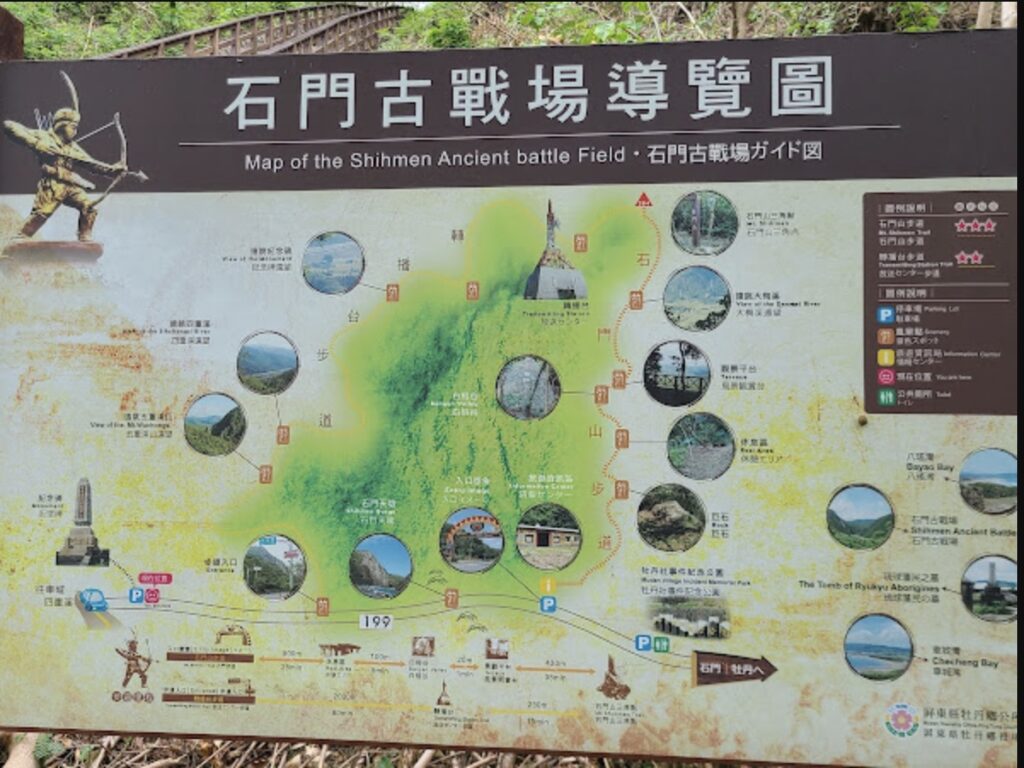
As Japanese soldiers began to fall ill due to the unfamiliar environment, they negotiated a ceasefire with the indigenous people, ending the conflict between the two sides. Here in Monument Park,now you can follow the trails of Shimen Mountain and the Mudan Incident Memorial Park, recalling the story of the indigenous ancestors who bravely resisted the enemy based on the natural defenses over a hundred years ago, and reflect on the historical event that changed Taiwan’s fate – the “Mudan Incident”.
Aftermath of Mudan Incident
The conflict eventually concluded with a truce. The Japanese military suffered casualties, not only from battle but also due to diseases in the unfamiliar terrain.
The incident signaled Japan’s growing imperial ambitions in the region. Just over two decades later, in 1895, following the First Sino-Japanese War, the Qing Dynasty ceded Taiwan to Japan, beginning 50 years of Japanese colonial rule in Taiwan.
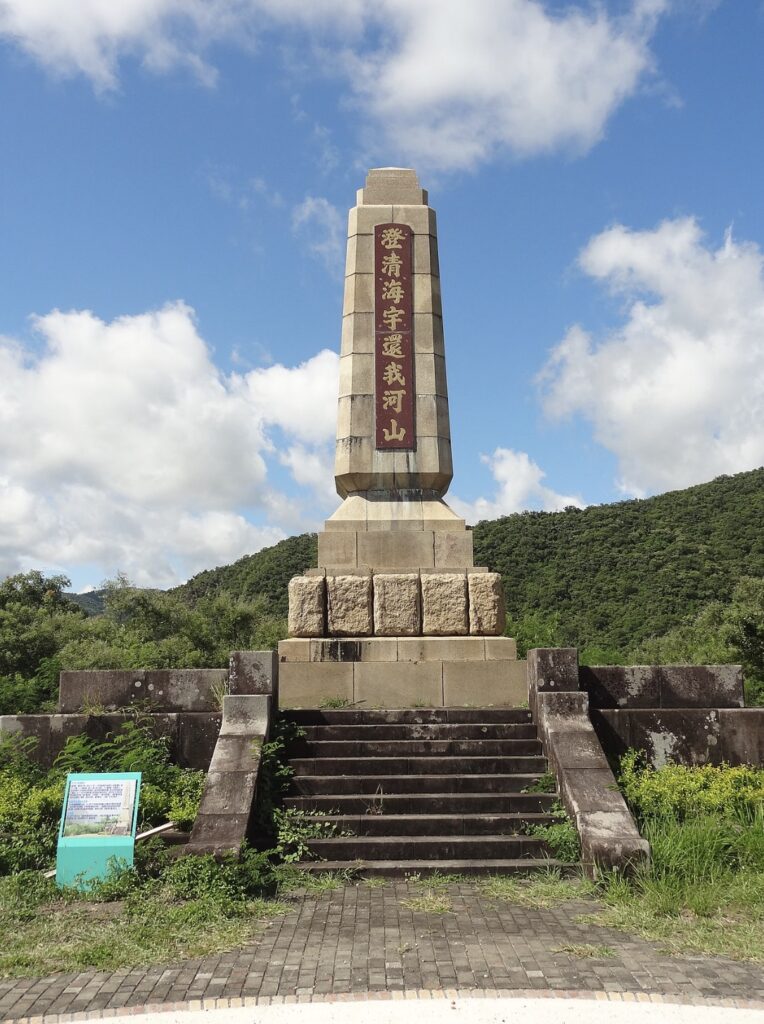
Till 2013, Monument was inscribed with a text 'Clarify the Universe, Return Our Rivers and Mountains',
Completed on March 13, 1936, it was inaugurated on March 15th of the same month. It was registered as a historical building of Pingtung County in 2011. In November 2016, the Culture Department of the Pingtung County Government removed the inscription ‘Clarify the Universe, Return Our Rivers and Mountains’ from the monument, leaving it blank and sparking controversy. In 2020, the inscription was restored to its original ‘Monument Commemorating the Legacy of Governor Saigo’. It would be best to include in your visit a Tomb of the 54 Ryukyuan Sailors if you are exploring this historical event in details.