
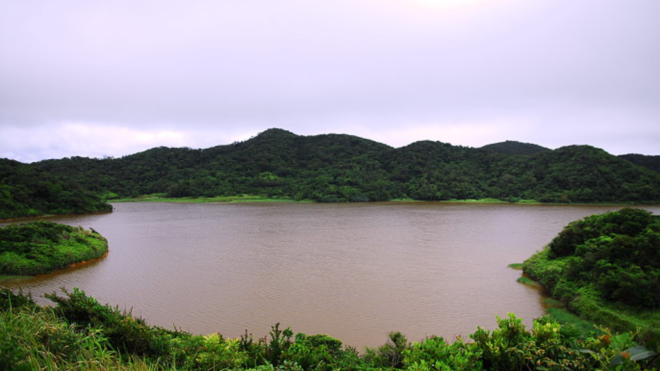
In Kenting National Park in Hengchun Township, Pingtung County, “Nanrenshan” is not high in altitude, but it has tropical, subtropical, and temperate vegetation, making it unique and internationally renowned. It is a true shining star of alternative Taiwan.
Nanren Lake located in Kenting National Park is a nationally important wetland. Scholars have long monitored the trend of its gradual land degradation, and some people boldly predict that Nanren Lake will “walk into history” in 20 years. We have a beautiful photo post about nature and animals in Nanrenshan Ecological Preserve, be sure to check it out.
The governing agency, Kenting National Park Management Office, currently controls the discharge outlet and clears surrounding invasive vegetation to preserve the wetland and increase the diversity of native species.
Kenting National Park Management Office is a government agency responsible for managing and overseeing Kenting National Park, which is located in southern Taiwan.
Its main responsibilities include conservation and management of the park’s natural and cultural resources, as well as providing services and facilities to visitors.
The office works to balance the protection of the park’s unique ecosystems with sustainable development and tourism activities.
It also conducts research and monitoring activities to better understand the park’s natural and cultural resources and to inform management decisions.
Professor Huang Da-Jun of the Department of Environmental Resources Management at Southern Taiwan University of Science and Technology stated that the phenomenon of land degradation in Nanren Lake is a normal process, and human intervention in management needs to be adjusted in a timely manner to maintain the original ecological environment and achieve a dynamic balance between human activities and nature.
The Nanshenshan Ecological Reserve in Kenting National Park is one of only two permanent sample plots of the international Long-Term Ecological Research Network in Taiwan.
It is also one of the country’s few remaining low-altitude primeval forests.
The reserve has a total of 8.6 kilometers of trails, where visitors can observe Taiwan-specific species such as the Portia Tree and the Lauraceae family, and at the end of the trail, they can overlook the National Important Wetlands “Nanren Lake.”
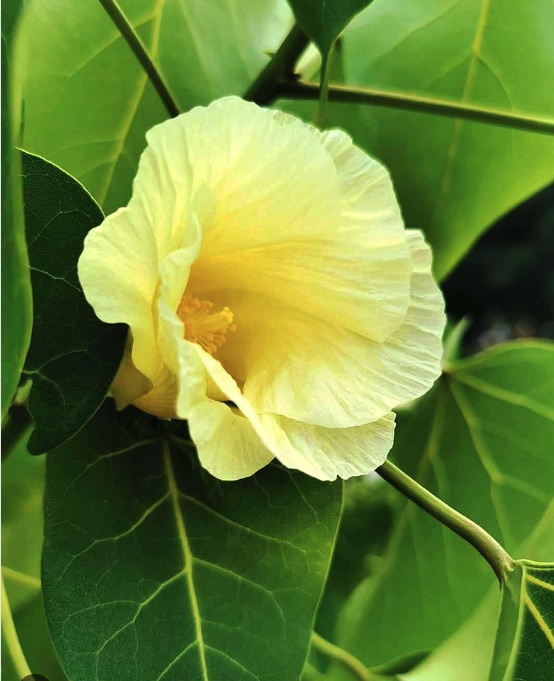
Portia Tree in Taiwan
The tour guide from the management office stated that although the altitude of Nanren Mountain in Kenting National Park is not high, it has tropical, subtropical, and temperate plant communities and its unique characteristics have gained international attention, making it a shining example of Taiwan’s uniqueness.
The guide pointed out that Nanren Mountain has an elevation of only 479 meters, and belongs to a tropical and subtropical climate zone, influenced by monsoons and geographic location. However, vegetation such as the Fagaceae family can be found at an altitude of 1,000 meters.
Its uniqueness lies in the concentration of temperate, tropical, and subtropical plants, making it important for research. It was designated as a long-term ecological research site under the sponsorship of the National Science Council, and is also part of the international long-term ecological research network, shining a light on Taiwan in the international academic community.
Mountains surround the Nanren Lake in Nanrenshan and has beautiful scenery, making it popular among tourists.
However, in recent years, it has gradually been experiencing land reclamation, and the national wetland is in danger of disappearing.
Experts and scholars are divided into two groups: some believe that wetland land reclamation is a natural succession phenomenon and should be respected, while others believe that Nanren Lake is a nationally important wetland that should be appropriately managed to prevent excessive land reclamation.

Main cause of current landification is the rapid growth of alien herbaceous plants, which cause sedimentation on the lake bed after withering.
The current management goal is to slow down the rate of landification. In addition to controlling the water level through outlet management, appropriate methods such as digging out alien herbaceous plants are also taken to reduce the rate of landification while enhancing the diversity of native wetland plants.
Herbaceous plants are plants that lack woody stems or trunks and have non-woody, green stems. They typically die back to the ground at the end of the growing season and regrow from the roots or seeds the following year. Examples of herbaceous plants include grasses, annual and perennial flowers, and vegetables like lettuce and spinach.
rofessor Huang Dajun from the Department of Environmental Resources Management at Chia Nan University of Pharmacy and Science stated that there is no high mountain or underground water source feeding into Nanren Lake.
Its main way of replenishing water is through natural accumulation. Recently, there has been less precipitation, and the water level has naturally decreased.
From an ecological perspective of species interacting with the environment, the landification of Nanren Lake is a normal phenomenon. The lake may become smaller and less abundant, but it will not disappear completely.
He said that there are many factors that affect the water level of the lake. Currently, the management office is renovating the water gate facilities and removing the biological debris of the invasive species such as Tilapia. The purpose is to discharge the sediment at the bottom of the lake and restore the original natural ecology of the native migratory fish.
“It will take some time for the wounds to heal and disappear, and time is needed to repair them.” Human intervention and management need to be adjusted in a timely manner to maintain the original ecological environment and achieve dynamic balance between each other.