
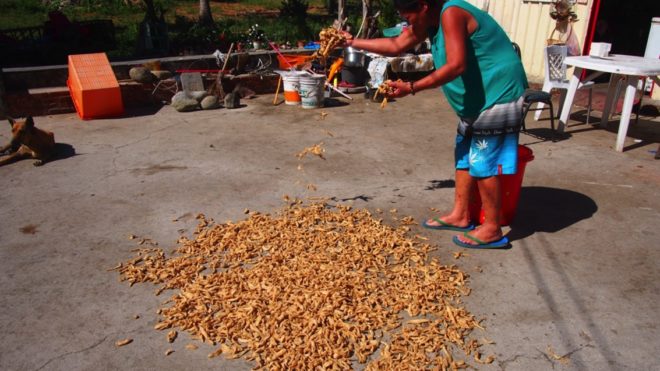
Although the whole plant of radish is edible, the Han people only like to eat fleshy underground stems.
Therefore, the fleshy underground stems of radish are commonly known as “small wooden stake” in Hokkien (Minnan) dialect.
The names for the holy product of diet appear in the Han literature.
As the saying goes, “Eat radish in winter and eat ginger in summer, to keep safe and healthy all year round.
As the saying goes, “Eat radish in winter and eat ginger in summer, to keep safe and healthy all year round."
Many people like radish, and they are easily found either in the cuisine of the family or restaurant.
There are many cooking methods of Kenting raddish – not only can cook with soup, but also can braise. Besides, they can also be made into kimchi, pickled into yellow radish, or dried into dried radish, etc.
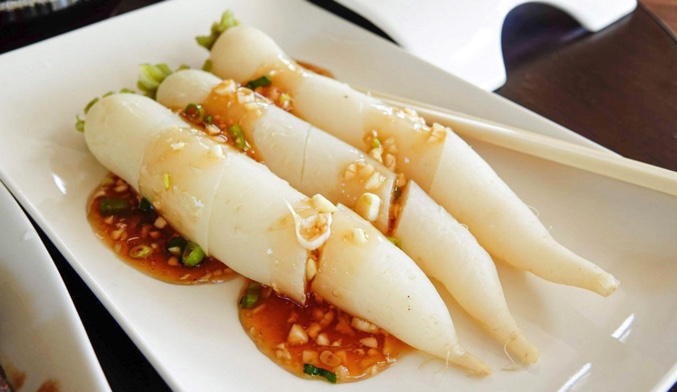
Radish cooked in pure Kenting way
The way how it is usually cooked in Kenting, they would cut it into sections, and then top it with onion and add garlic soy sauce.
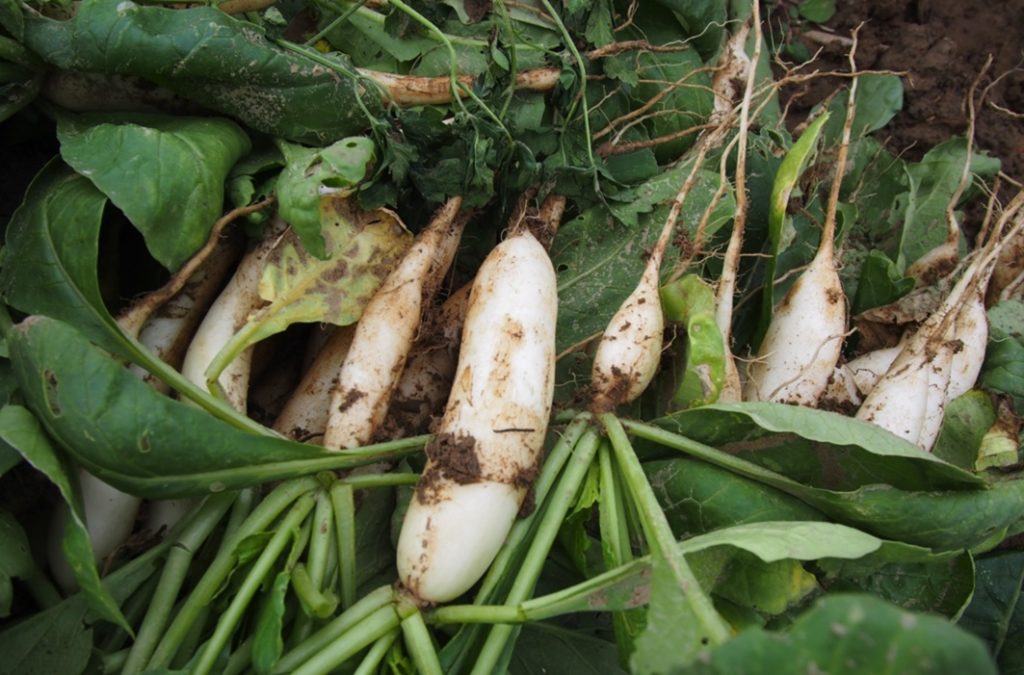
In the laterite layer of west tableland of Hengchun, a type of small white radish is produced. It is not the large radish in other places, nor is it the “white jade radish” imported from Japan.
It is “small wooden stake radish”, being passed down from generation to generation by the ancestors.
West tableland is one of the few areas of Hengchun Peninsula that directly face downhill wind, and it is difficult to plant general vegetables after autumn.
The local resident plant the small radish which is commonly known as “small wooden stake” during the windy season after the Mid-Autumn Festival.
In this period the water is less, and this is coupled with the red soils which is originally relatively poor, making the small radish grow thinner.
However, to fight against the harsh environment, the plant will send all the nutrients and water to the underground stem to make sure it is alive, but also produce crispy, sweet, flavorful, and unique “small wooden stake” radish with delicate flesh.
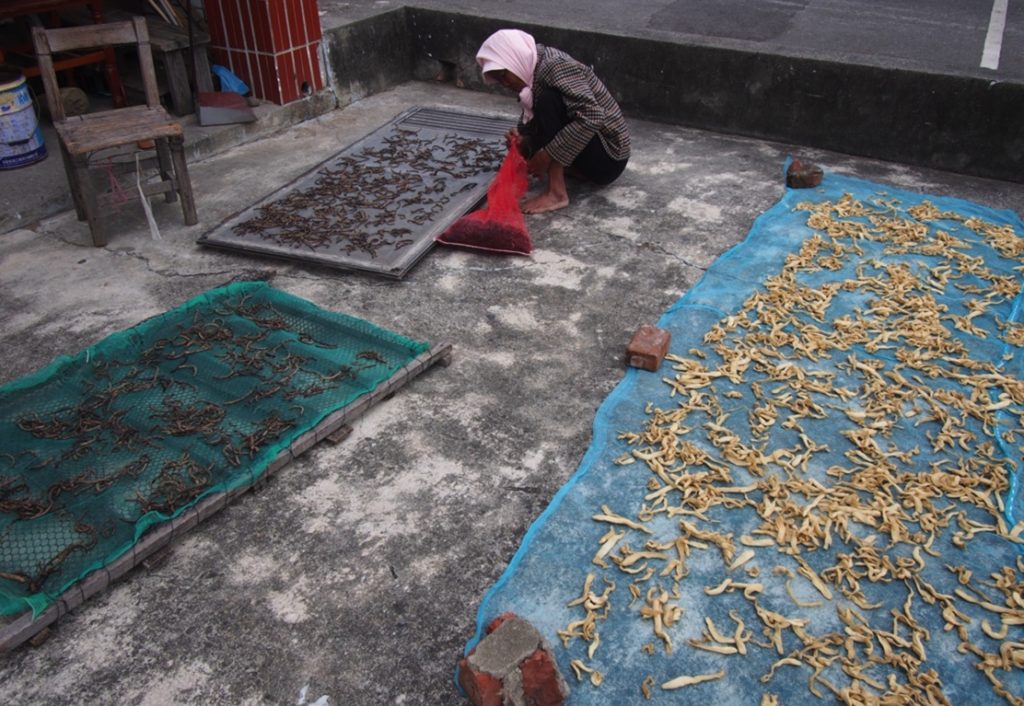
Local elderly resident drying radish
Why is small radish of Kenting called “small wooden stake”? In Hokkien (Minnan) dialect, “small wooden stake” means the wooden stakes which could be stapled into the land for tying cattle.
To let the cattle tied within the length of the rope, and therefore they can eat the grass within the radius circle of the grass, only left a small section of the stakes to be exposed on the grass. Otherwise, it would be easy to mix the cow rope, this short wooden stake tied to the cow rope is called “small wooden stake”.
The radish of Hengchun Peninsula, which grows small and short, looks like a “small wooden stake”, naturally known as “small wooden stake” radish.
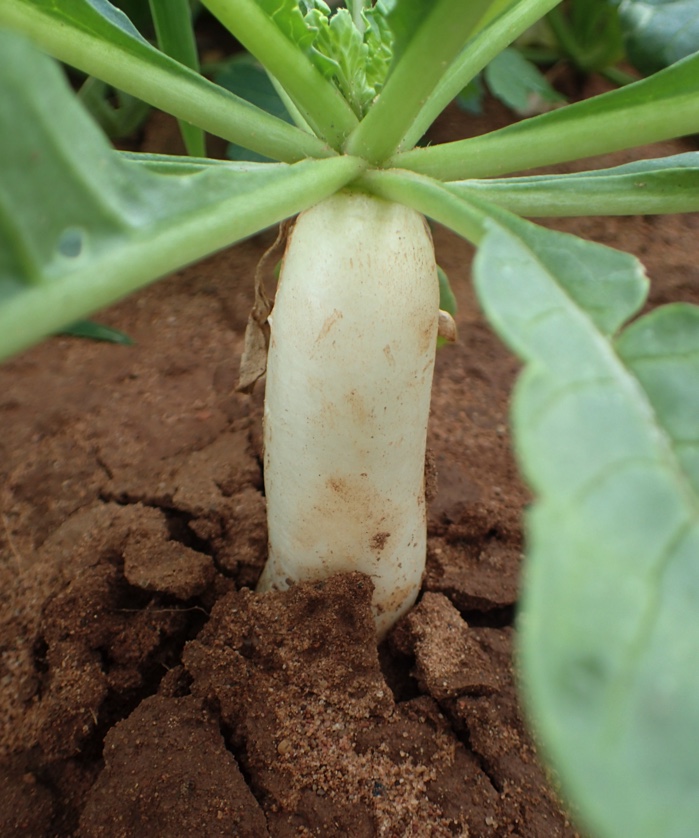
Based on Lunar calendar, the period when there is an abundant production of “small wooden stake” radish, is from November till the beginning of the year. Radish is mostly planted in the western part of the Hengchun Peninsula and Kenting. The yield is not much; it is nutritious and delicious, so every year when it is on the market, the market is very good. Local Kenting people always buy radish to home.
It is then be cooked (with soup) or braised. Even, more people like to soak it with salt and water, which is what is known as “small wooden stake cage”. Either could it be dried into dried radish, or be cooked into fish head soup, rib soup or chicken soup.
Delicious taste is always evocative, and it has long become the most characteristic local flavor on the peninsula and especially Kenting.