
Formerly a commercial port, Xinjie Village in Checheng Township, Pingtung County, was once known as “Dongdong – 咚咚.”
Zhang Meihui 張美惠, the chairperson of the Xinjie Community, explained that merchant ships would dock here, and due to the sound of ships bumping into each other (“dong dong” sound) when they were crowded together, the place got its name.
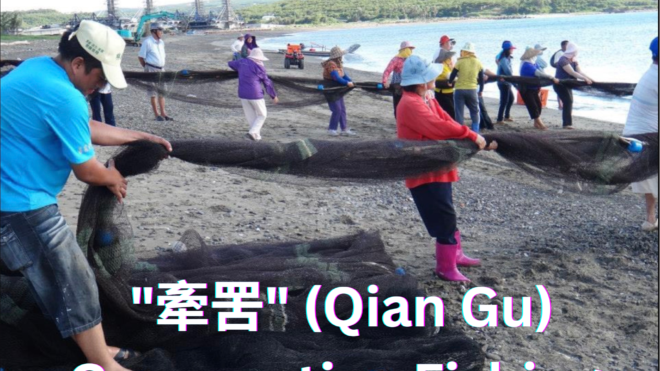
Visiting the seaside of Xinjie Fishing Village, over a dozen elders were involved in the traditional cooperative fishing practice called “牽罟” (qian gu) in its early days.
With the support of senior residents and dedicated community volunteers, this practice is revised now, welcoming visitors to sign up and experience it.
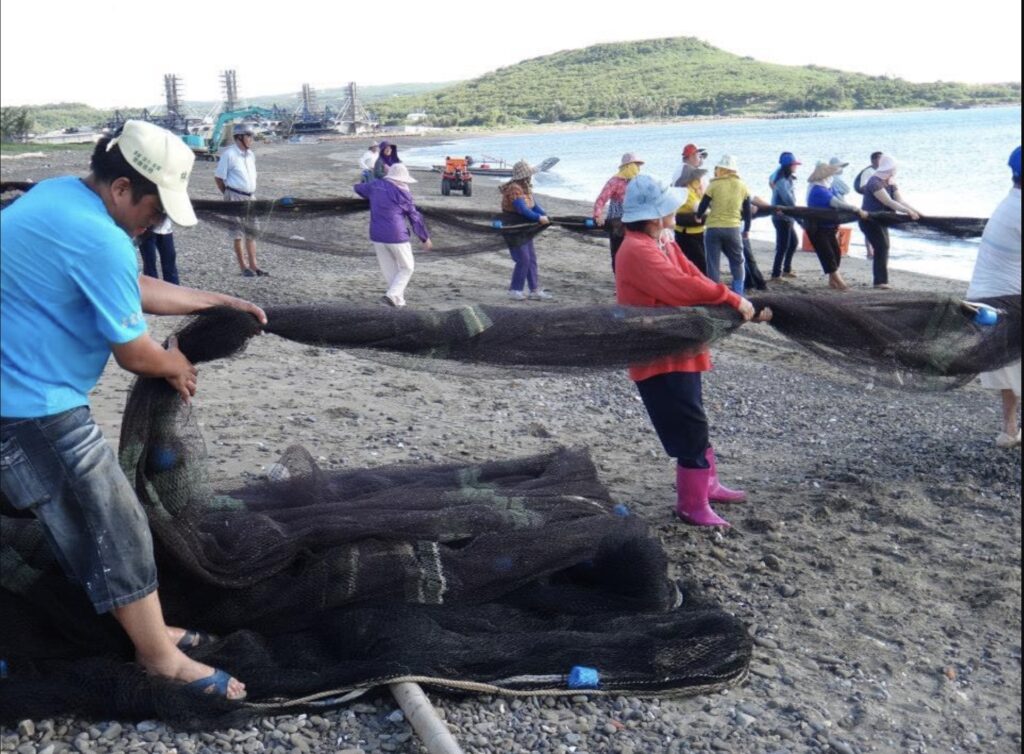
Traditional practice of “牽罟” (qian gu), or cooperative fishing in Xinjie Village
The Pingtung Forest District Office few years ago organized a walking tour event along the coastal communities of the western side of Checheng Township. The tour began with a visit to the “Sheliao Community,” where an elder named Lin Zhenghe shared the process of traditional cooperative fishing. During its heyday, more than ten groups were engaged in this practice, targeting shrimps and mullet fry.
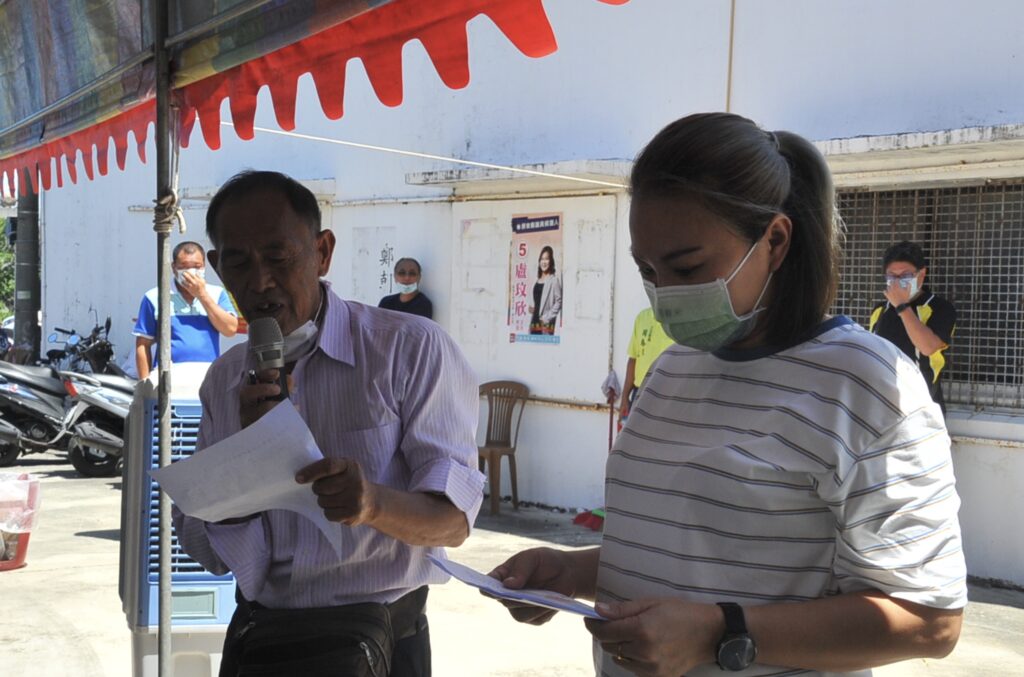
Zhang Meihui, the Xinjie Community Development Association chairperson (on right).
She mentioned that in the past, passenger ships were crucial for trade and commerce in Xinjie, acting as transportation between Sheliao Harbor and the Hengchun Peninsula for trading activities.
Ships would anchor along the Xinjie shoreline at night. The crashing waves caused ships to collide, creating the “DOM DOM” sound, which contributed to the former name “Dongdong,” hence the origin of the name.

The Xinjie Community in Checheng Township strives to preserve and enable the younger generation to understand the tradition of “牽罟” (qian gu), and they organize “牽罟” (qian gu) experiential activities every year.
Zhang Meihui, the Xinjie Community Development Association chairperson, shared her thoughts. She mentioned that the villagers in the early days mainly relied on cooperative fishing to sustain their livelihoods (exchanging fish for daily necessities).
Over thirty villagers would gather, and they would lower fishing nets into the sea from bamboo rafts. The villagers on both sides would then work together to haul the nets laden with fish, back ashore.
Using a circular walking method, they would then evenly divide the catch based on the number of participating villagers. This allowed each villager to receive a fair share of fish for personal consumption or trading for daily necessities.
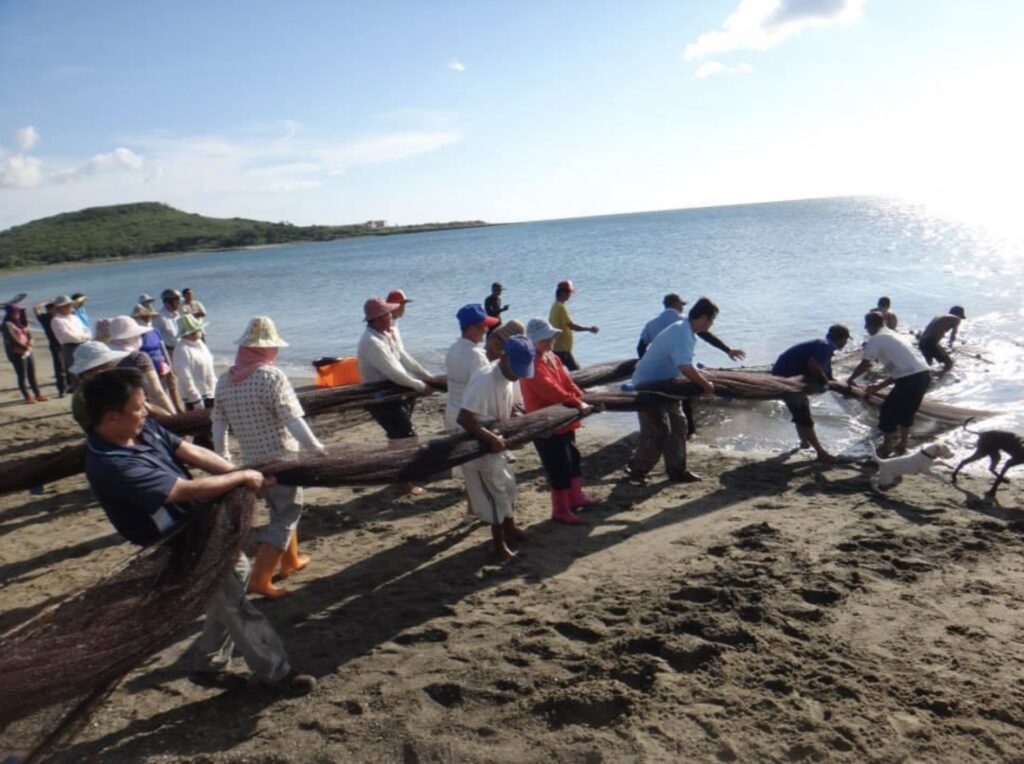
The Xinjie Community Development Association aims to preserve and help the younger generation understand the significance of “牽罟” (qian gu), the traditional industry that was vital to their ancestors.
Each year, they hold “牽罟” (qian gu) experience events, and numerous communities from other counties and company groups sign up to participate.