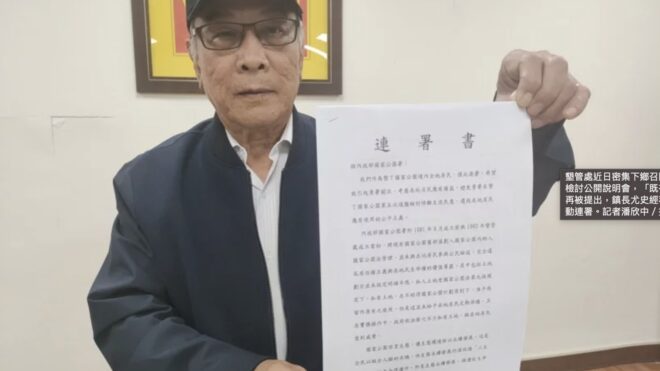
Kenting National Park, established in 1982, initially included existing settlements within its boundaries, which has led to ongoing resistance from residents demanding to be carved out. Through comprehensive reviews, the Kenting Management Office has moderately relaxed restrictions to resolve the situation. Manzhou Township and Hengchun Township, which have a large amount of private land within the park, not only raised the issue again in the recent fifth comprehensive review meeting but also initiated a “Carve Out Existing Tribes from National Park 既有部落劃出國家公園” petition reflecting public sentiment. Environmental groups in Pingtung call for resistance against being breached by populist forces.
Let’s refresh a bit on the main things that Kenting National Park law enforces before we continue with the article further.
Summary of The Kenting National Park Law
The Kenting National Park law outlines various prohibited activities within the park to ensure the protection of its natural resources and environment. Some of the key regulations include:
- Sale or display of hunted or collected animals, plants, and their specimens in contravention of the law is prohibited.
- Collection and sale of geological and paleontological specimens from the park are prohibited, except with proof of outside origin.
- Peddling, setting up vending stalls, or selling goods outside of the permitted area is prohibited.
- Livestock grazing in unapproved areas or within 20 meters from the main road is prohibited.
- Unauthorized placement of structures that disturb the park landscape is prohibited.
- Business operations involving all-terrain vehicles, sandboarding, or land sailing are prohibited.
- Climbing in certain areas such as Dajian Mountain, Frog Rock, or Sail Rock is prohibited.
- Lighting fireworks and firecrackers is restricted to specific holidays and events.
- Use of lights, releasing sky lanterns, camping, barbecues, and similar activities outside legal campgrounds are prohibited.
- Feeding wildlife or releasing or abandoning animals within the park is prohibited.
- Certain beach and coastal activities are restricted, including setting up umbrellas and swimming in designated areas.
- Entry to some boardwalks, like the Maobitou Park boardwalk, is prohibited.
- Dropping anchors above coral reefs is prohibited.
- Hosting outdoor musical activities outside designated areas is prohibited.
- Recreational activities in coastal waters are subject to restrictions based on conditions such as wave height and wind force.
- Operating remote-controlled drones without permission is prohibited.
- Political activities and actions that could cause social disputes within the park are prohibited outside populated areas.
These regulations are part of the efforts to maintain the delicate balance between human activities and environmental conservation, ensuring that Kenting National Park remains a protected area for its unique ecosystems and as a destination for future generations to enjoy.
The Kenting National Park Management Office is required by law to review the park’s plan every five years. They have recently conducted intensive local meetings for the fifth comprehensive review, where the voice for carving out private land has been raised again.
Hengchun Town’s Mayor Yu Shi-Jing said he has been striving through petitions and local residents to revise the park law and the fifth comprehensive review. He argues that local residents’ rights should be considered without violating the principles of ecological protection, allowing existing tribes, general control areas, and private land to be carved out entirely.
The petition will eventually be submitted to the Kenting Management Office and other relevant agencies, aiming for ecological conservation, human dignity, and livelihood development to operate within a fair system.
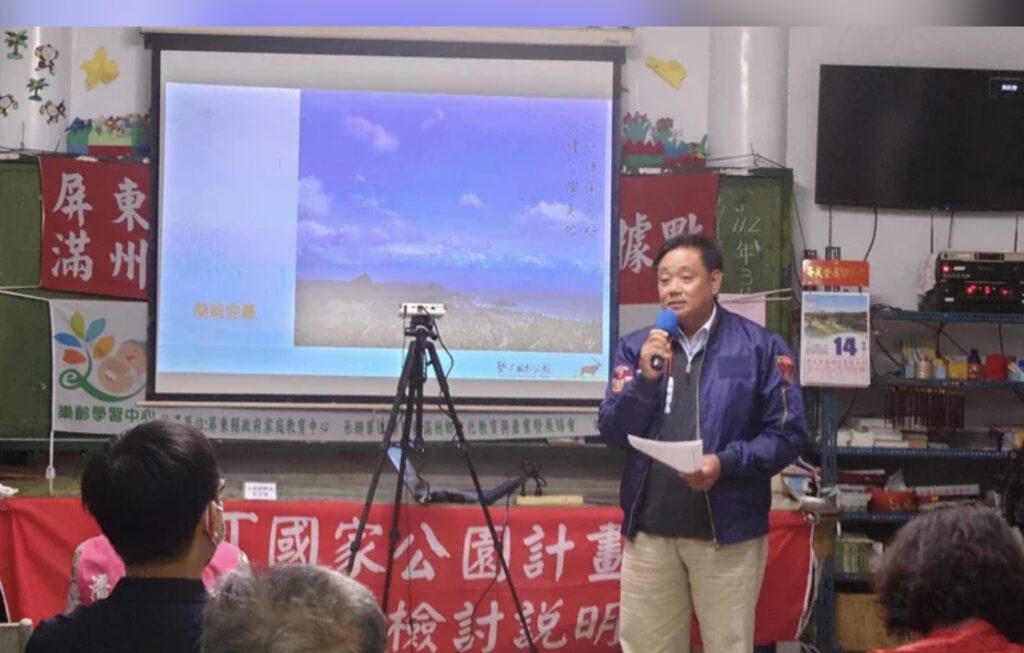
Gu Rongfu, the initiator of the petition and Mayor of Manzhou Township, points out that the National Park Law does not set a clear timeframe for land designation, creating uncertainty for residents regarding land use, affecting their lives and development. Although Article 9 of the National Park Law states that private land within the park area is allowed to be preserved for original use without hindering the park plan, it doesn’t provide sufficient protection for residents. In practice, when private land is needed for implementing the park plan, the government may expropriate it, threatening the constitutional rights to land ownership.

Manzhou Township Chief Gu Rongfu
The Kenting Management Office explains that the ‘5 通 Tsung’ (comprehensive reviews) follow the national land planning implementation guidelines to review land use simplification, rational use of land in indigenous regions, identification of original legal structures from ‘4 通Tsung’, and the implementation results of changing agricultural land near settlements to rural construction land.
They welcome all sectors to provide review opinions and, through comprehensive reviews, make progressive, suitable adjustments that align with the goals of the park plan and local development needs.
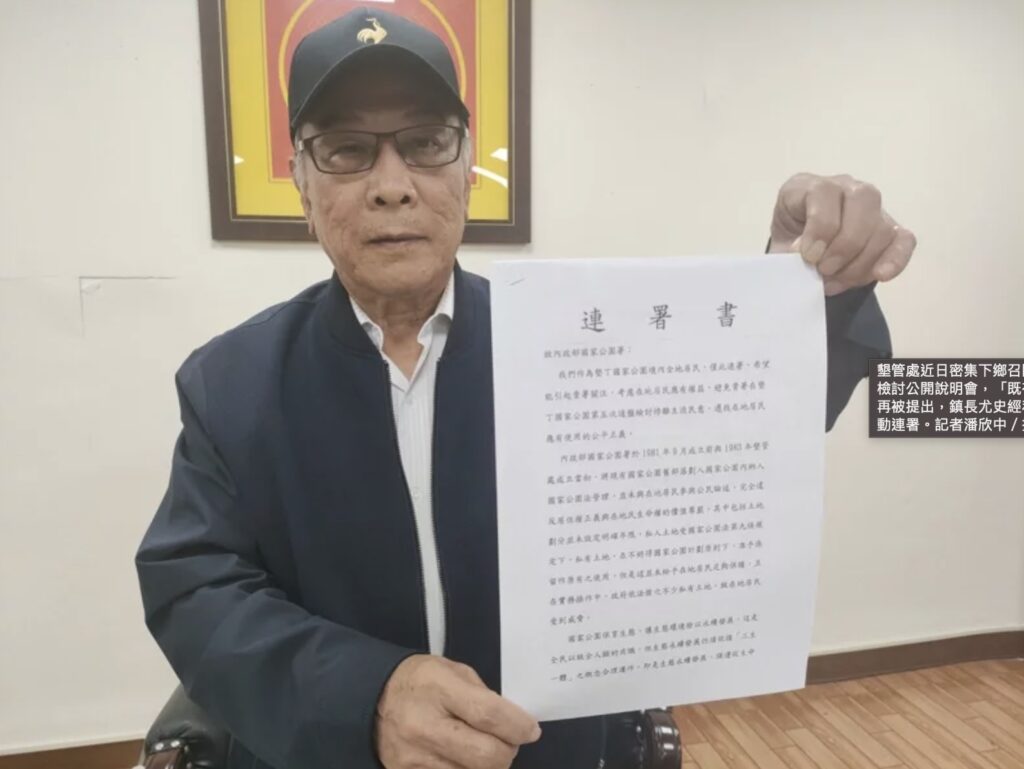
“Without the National Park Law, who knows what would become of this beautiful land,” says Hong Hui-Xiang 洪輝祥, former chairman of the Pingtung County Environmental Protection Union.
He argues that green mountains and sustainable ecological resources can bring in continuous tourism wealth. In the tug-of-war between environmental conservation and human development, whether the Kenting Management Office is ‘managing too much’ is subjective, but this last line of defense must not be breached by seemingly populist forces.