
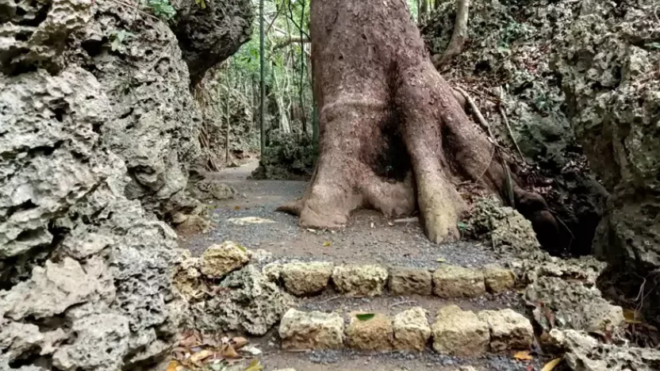
Kenting National Forest Recreation Area is well-known in Taiwan for its “forest bathing” spots. Recognizing that the cement pathways built in earlier years were incompatible with the natural environment, the Forestry Conservation Agency’s Pingtung Division initiated a “de-cementation” project the year before last in the Banyan Tree Trail area.
The pathway surfaces were changed to a mixture of sand and gravel, with the edges lined with cobblestones. This not only made the area more environmentally friendly but also integrated the landscape with the surrounding high-elevation coral reef environment, creating an experience akin to walking through a forest theater from a historical movie.
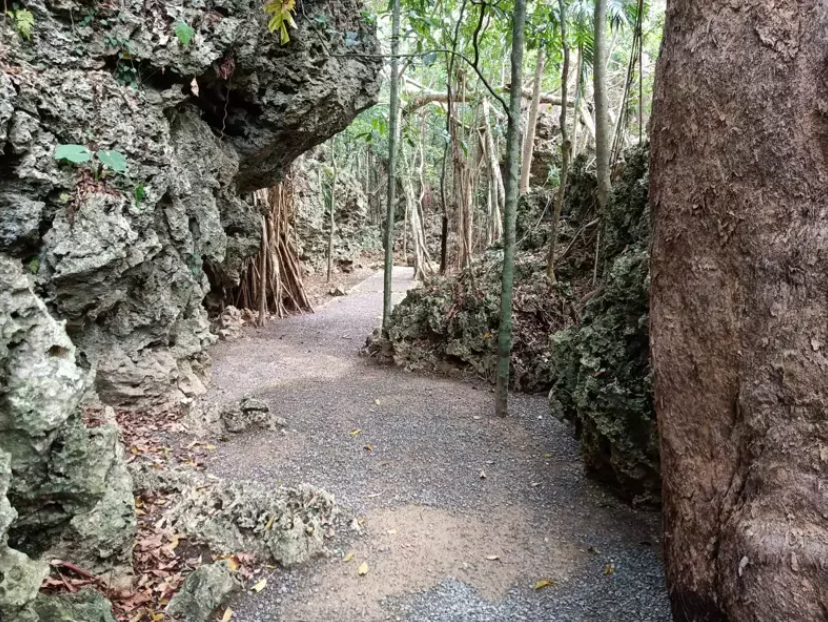
The 56-year-old Kenting National Forest Recreation Area, with its dense tropical forests, was once a tropical botanical garden during the Japanese occupation. It features high-elevation coral reefs and limestone terrain, a rare geological landscape in Taiwan. The park contains over a thousand tropical plant species, making it the only tropical botanical garden in Taiwan.
Its unique geological features include canyons formed by coral reef rocks, stalactites, caves, and stalagmites, making it a long-standing popular scenic area. The park management began renovation projects the year before last, including the Guanhai Tower and Banyan Tree Trail service facilities.
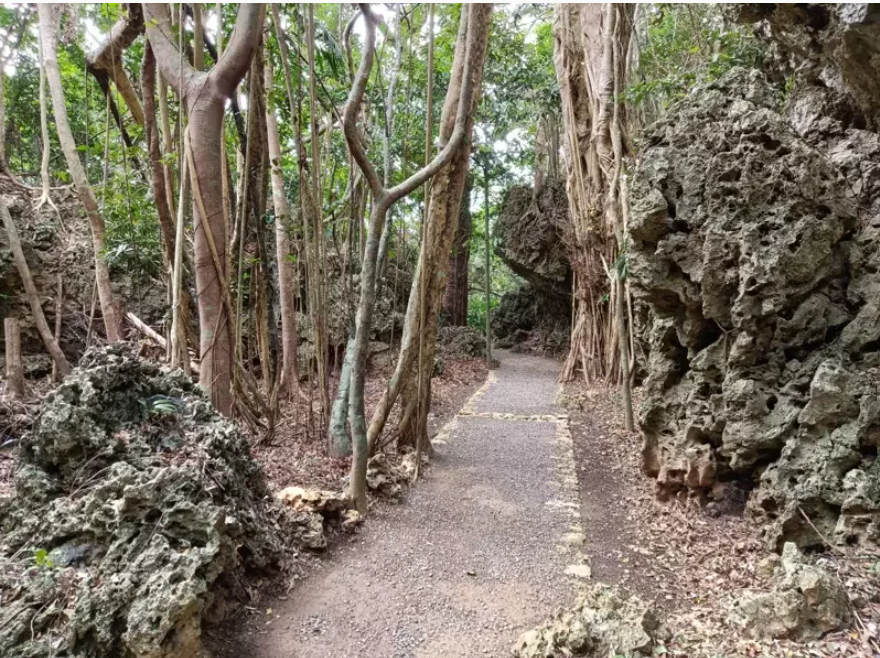
The Pingtung Division of the Forestry Conservation Agency stated that the Banyan Tree Path is a serene area that coexists with nature. The renovation plan followed ecological experts’ recommendations and was designed to balance ecological conservation and recreational needs through “de-cementation.” Damaged paved surfaces and incompatible cement slabs and other facilities near the surrounding high-elevation coral reefs were removed. The materials were improved, using simple handcraft methods and natural materials like cobblestone, sand, and gravel for the pathway surfaces.
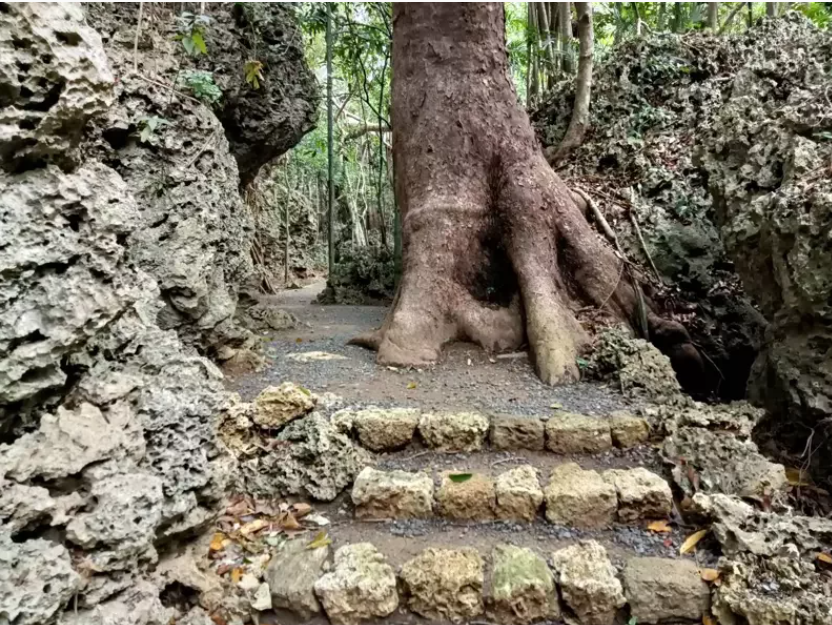
The Pingtung Division of the Forestry Conservation Agency also mentioned that the new construction method reduces environmental disturbance. A stone drainage system was built to decrease runoff erosion, solving the issue of waterlogged and muddy low-lying sections, making them passable.
Existing large trees were preserved to provide the most suitable growth environment, allowing the pathway to blend with the surrounding high-elevation coral reef environment, creating a win-win situation for both people and trees. Walking along the Banyan Tree Path, one can see banyan tree roots that make it look like a forest within a single tree, reminiscent of a historical movie’s forest theater.
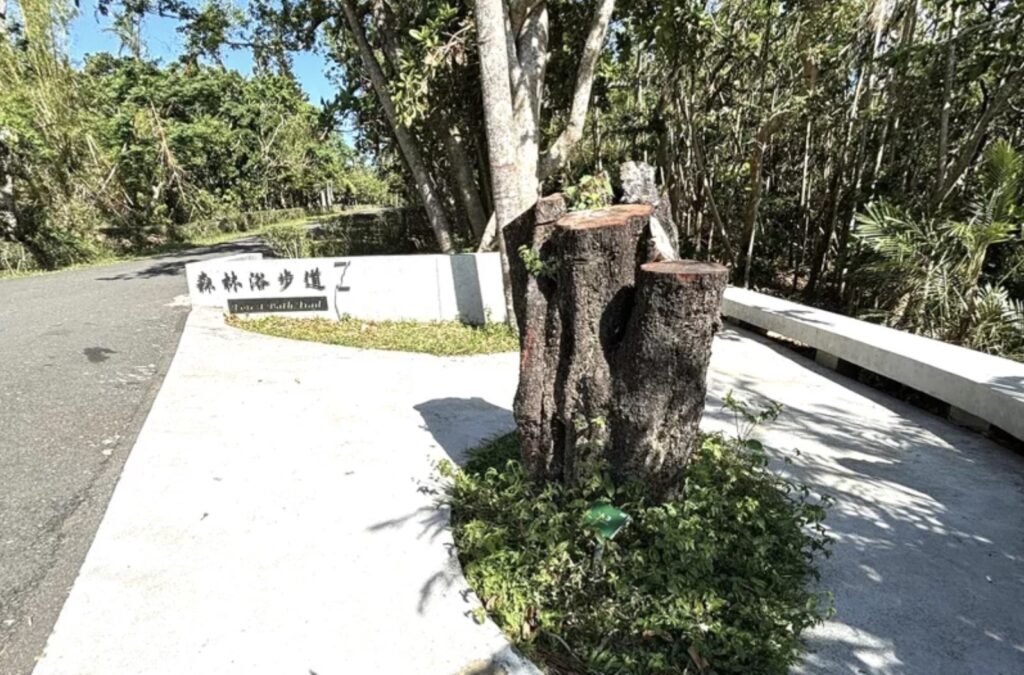
At the entrance of the Kenting National Forest Recreation Area, a valuable tree species under forest law, Maoshi (Taiwanese Ebony), was found cut down at the end of last year by an environmental group.

This is how it looked before it was found cut down
They suspected that the tree’s roots were suffocated by cement. The Forestry and Nature Conservation Agency’s Pingtung Division speculated that it died from brown root rot and was removed for safety reasons. The cement pathway at that section is also planned to be fully “de-cemented.”