If you have been browsing through our Interactive Checheng Tourist Guide, then you probably noticed that Baoli Village had the following intro made by us:
Step into the rich tapestry of Baoli Village, a testament to Hakka heritage nestled in the vast landscapes of Checheng Township. From the lush Baoli Forest to the tranquil scenes of egrets atop grazing cattle, Baoli offers a blend of history, agriculture, and natural beauty. Dive deep into its cultural roots, explore its serene pastures, and let the village's charm transport you to a bygone era.
This is no coincidence, and this is because Hakka people from the “Six Heaps” region of Kaohsiung and Pingtung migrated in succession to Baoli Village in Checheng Township, Pingtung County during the Qianlong era of the Qing Dynasty. This village is the southernmost Hakka settlement in Taiwan.
Lorem ipsum dolor sit amet, consectetur adipiscing elit. Ut elit tellus, luctus nec ullamcorper mattis, pulvinar dapibus leo.
“Six Heaps” (六堆, Liù Duī) refers to a historical and cultural region in southern Taiwan, encompassing parts of present-day Kaohsiung and Pingtung. The term originated from the Qing Dynasty era, when the region was divided into six administrative zones or “heaps.” These zones were:
- 旗山堆 (Qíshān Duī) – Qishan
- 美濃堆 (Měinóng Duī) – Meinong
- 燕巢堆 (Yàncháo Duī) – Yanchao
- 田寮堆 (Tiánliáo Duī) – Tianliao
- 鳳山堆 (Fèngshān Duī) – Fengshan
- 高雄堆 (Gāoxióng Duī) – Kaohsiung (now refers to a larger city but historically was a smaller area)
The Hakka people predominantly inhabited the “Six Heaps” region, and as such, it has a rich Hakka cultural heritage. The term “六堆” is significant in understanding the history and distribution of Hakka communities in southern Taiwan.
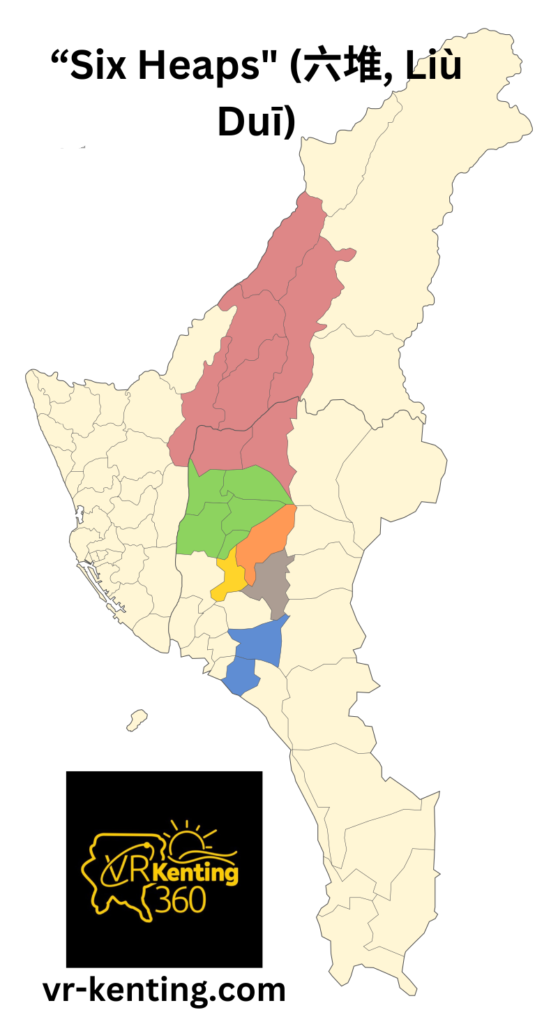
“Six Heaps” (六堆, Liù Duī) depicted on Southern Taiwan map
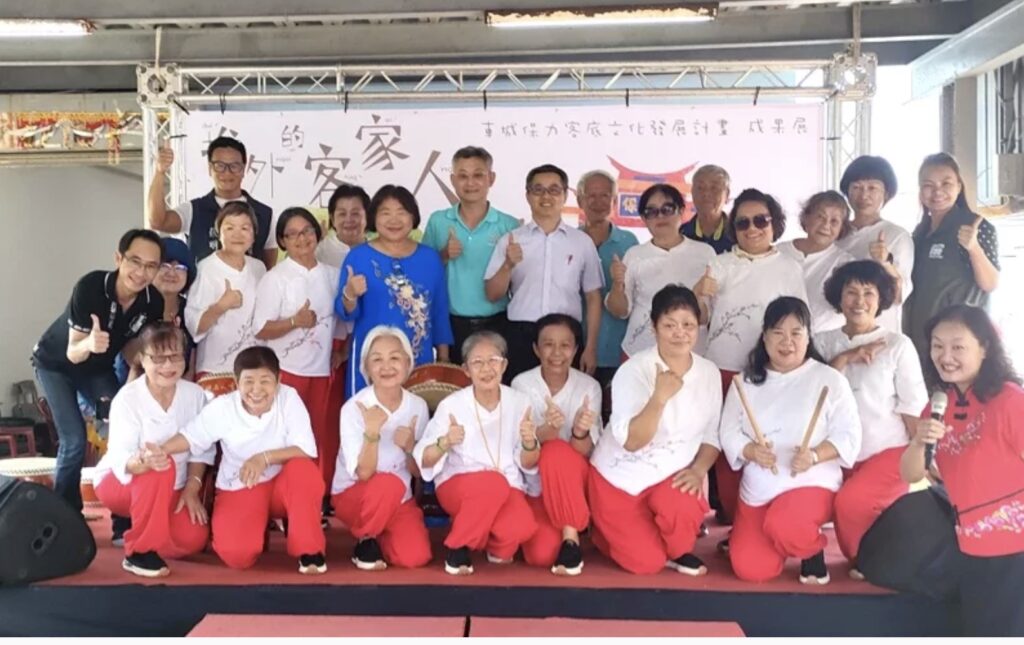
However, influenced by the predominant Hoklo (often referred to as Minnan or Hokkien) culture in neighboring areas, they became “Hok-ló-kheh” – Hakkas who no longer speak Hakka but speak the Hoklo language. In an effort to preserve and revive the fading culture, the county government, in collaboration with academic institutions, launched the “Culture Development Project for Hakkas outside the Six Heaps” last year. Recently, they showcased the results of participatory field surveys, publications, and training for tour guides, emphasizing cultural identity and autonomy.
The county’s Hakka Affairs Office stated that the term “Hok-ló-kheh 福佬客 “ was traditionally used to refer to individuals of Hakka descent who, while no longer speaking Hakka, are fluent in the Hoklo language. To avoid derogatory labeling and marginalization, the official term “客底” was adopted.

The Baoli Village Cultural Development Project, which spanned a year, was led by a Pingtung University of Science and Technology team. They conducted participatory historical and cultural field surveys and experiences, collaborated with local schools on curriculum design, and organized outdoor educational activities. Through active participation of local citizens, the project aimed to foster community cohesion and long-term cultural tourism, providing economic revitalization for Baoli.

Baoli Village 保力村
A 90-year-old elder from Baoli Village, Zeng Dexing 曾德興, mentioned that the ancestors who settled in Baoli Village migrated from the Six Heaps area over 200 years ago, passing through places like Jiadong 佳冬, Meinong 美濃, and Zhutian 竹田 before arriving. The families united to protect their strength and settlements, forming a “Mini Six Heaps 客家小六堆” in the Hengchun Peninsula.
However, under the strong influence of the prevailing Hoklo culture, traditional Hakka culture declined significantly and their mother tongue vanished. While they identified as Hakkas and worshipped at the temple of the Three Mountain Kings, they mainly used the Hoklo language. Though with limited success, efforts were made 30 years ago to rescue the disappearing culture and language.
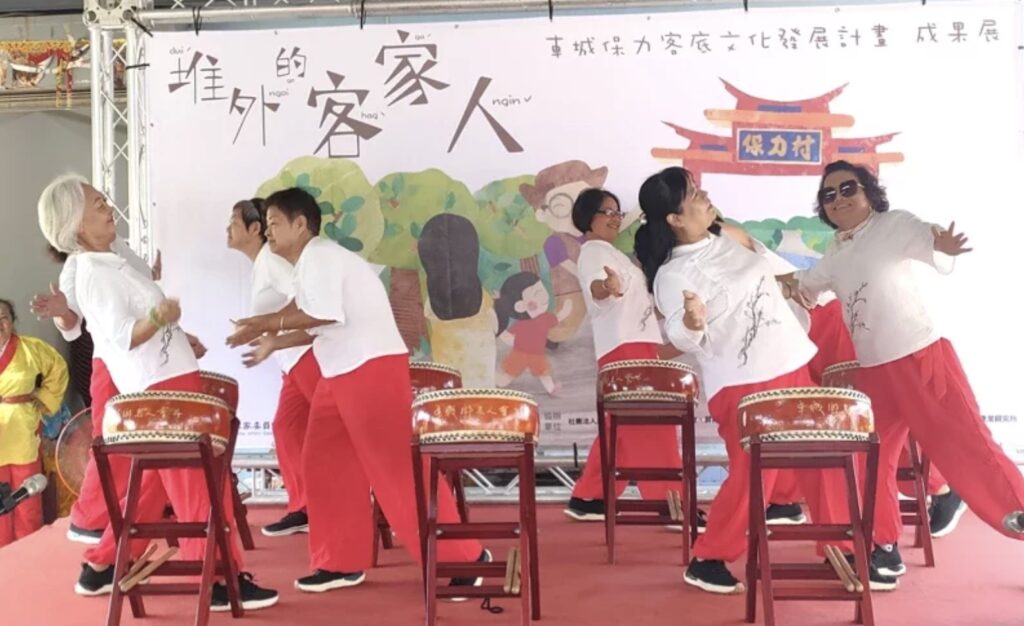
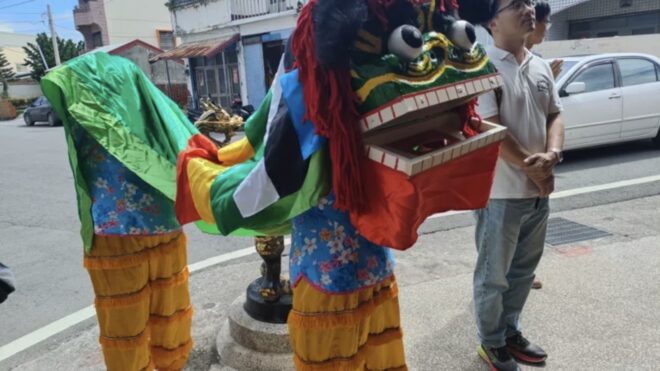
Zeng Dexing, the Baoli Community Development Association’s chairman, said that the villagers’ transformation into “Hok-ló-kheh” reflects the historical traces of Taiwan’s diverse ethnic integration. Nevertheless, traces of Hakka culture are still evident in the village’s architecture and religious beliefs. The community continues to uphold traditional Hakka festivities, such as Lunar Lantern Festival rituals and turtle-begging activities. Murals depicting the village’s history convey the resilient spirit and values of Hakkas.

The culture of our Hakka ancestors cannot disappear in our generation!” he emphasized. Through the county’s year-long cultural development project, academia collaborated with local groups to organize workshops, field surveys, and cultural experiences, publish historical and cultural journals, and offer Hakka language courses.
The goal is to showcase the rich tapestry of everyday life, allowing tourists to learn and experience, gradually retracing historical paths, breaking out of ethnic boxes, exploring cultural identities, and presenting a locale where diverse groups respect and thrive together.