

Autumn is when northern raptors migrate through the Hengchun Peninsula in Pingtung. In the past, locals hunted these birds for food or made them into specimens for export, leading international conservation groups to criticize the area as a ‘killing field.’
Thirty-four years ago, these raptors were listed as protected wildlife. Both government and civilians have since invested in anti-hunting and conservation research efforts. This has turned into an annual raptor-watching event in Taiwan. Four years ago, Japan, Taiwan, and the Philippines jointly initiated an international summit on the Grey-faced Buzzard and migrating raptors. This year, the summit will be held in Taiwan for the first time, connecting international efforts to protect these precious migratory ‘guests’.
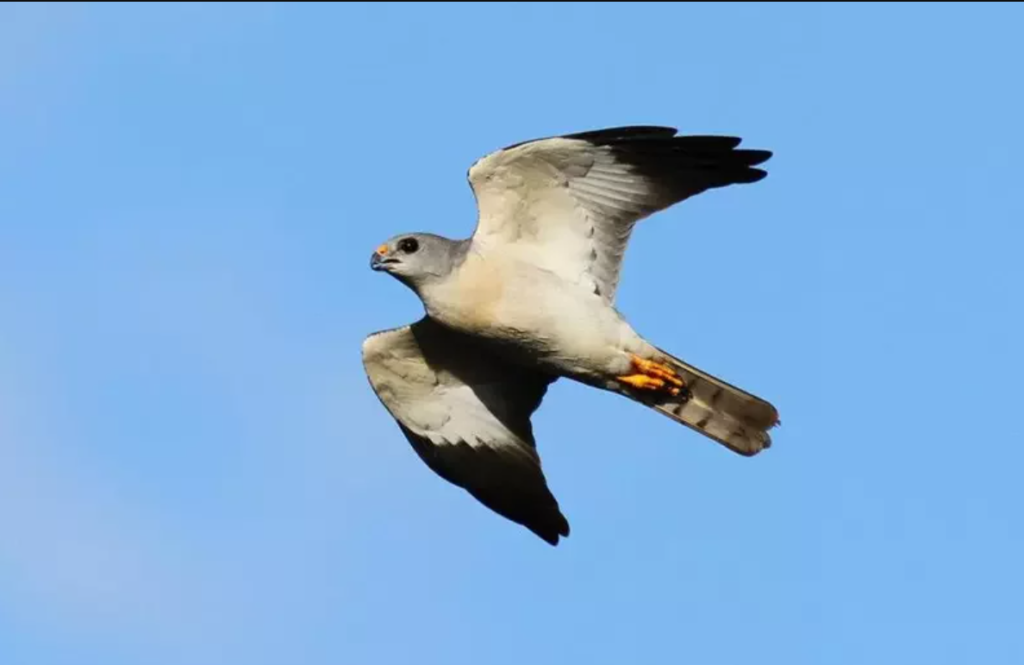
Every autumn, an average of about 300,000 migratory raptors pass through the Hengchun Peninsula in Pingtung. The picture shows the Grey-faced Buzzard, also known as the ‘National Day Bird’, arriving in October of previous years.
For 33 years, the Kenting National Park has witnessed the migration of raptors in the autumn. Observations show that about 300,000 raptors, including the Crested Goshawk, Grey-faced Buzzard, Honey Buzzard, Chinese Sparrowhawk, and Common Kestrel, pass through each year. Resident raptors include the Crested Serpent Eagle, Crested Goshawk, Chinese Sparrowhawk, and Black Kite.
The Crested Goshawk arrives in early September and has the highest numbers, averaging over 100,000 and even recording numbers exceeding 200,000. Following them is the Grey-faced Buzzard, also known as the ‘National Day Bird’, which arrives in early October. They roost in the low mountain forests at night to rest and forage and then continue their southward journey the next morning.”

Crested goshawk (image credit – Birding in Taiwan)
The Kenting Management Office states that Taiwan is situated on an important migratory route for raptors in East Asia and is a significant ecological tourism asset for various parts of Taiwan during spring and autumn. In the spring, one can admire the northward return of the Grey-faced Buzzard at locations like Guanyin Mountain in New Taipei City and the Bagua Plateau in Changhua County.
In the autumn, one can witness the magnificent ‘eagle river’ and ‘eagle sea’ sceneries formed during the southward migration at places like Lina Li in Kaohsiung, Sige Mountain in Taitung, and Manzhou in Pingtung. This year, in mid-October, the annual raptor season event will take another significant step in international cooperation, hoping to jointly protect the northern migratory raptors.

The International Grey-faced Buzzard and Migratory Raptors Summit was held twice in Japan previously, with one instance being interrupted due to the pandemic. This year, it is co-hosted by the Taiwan Raptor Research Association, the Kenting Management Office, and the Pingtung Branch of the Forestry and Nature Conservation Bureau of the Ministry of Agriculture. Representatives from local governments such as Ichikai Town in Tochigi Prefecture, Uken Village in Kagoshima Prefecture, Miyakojima City in Okinawa Prefecture, and Sanchez-Mira in the Philippines have been invited.
Additionally, representatives from the Japanese Asian Raptor Research and Conservation Federation and civilian representatives from the Philippines and Thailand will share the current status of migratory raptor research and studies from their respective countries.

For 33 years, the Kenting National Park has witnessed the migration of raptors in the autumn. Observers wake up at 4 a.m. every day and head out. By dawn, they must be stationed at the observation point at the Lingxiao Pavilion in the Sheding Park, without taking breaks, and continue recording until noon.
Lin Wen-he, the director of the Kenting Management Office, stated that humans have a limited understanding of the migratory raptors in East Asia. Research and observation can track the annual fluctuations in their numbers as they migrate southward. An increase in numbers might indicate an improvement in their habitat environment, while a decrease suggests deterioration. Monitoring is a marathon-like research task. Every autumn, it continues for two consecutive months. Observers wake up at 4 a.m. every day and head out.
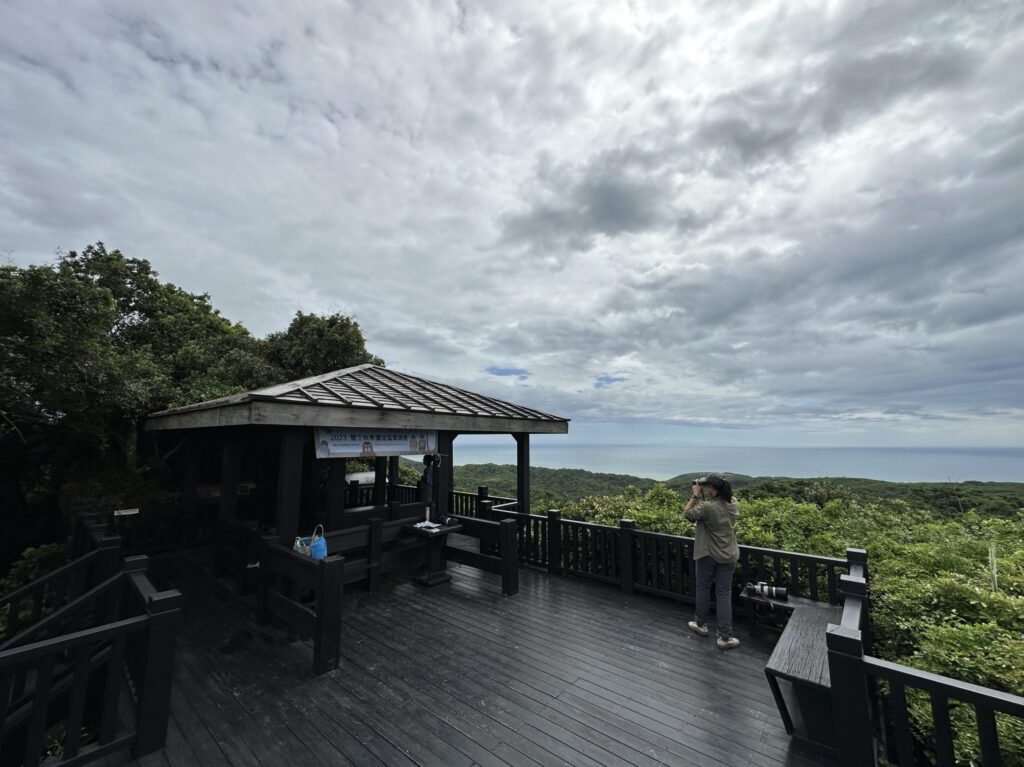
Sheding nature park’s Lingxiao Pavilion is the one the best places to watch migratory birds
By dawn, they must be stationed at the observation point without taking breaks and continue recording until noon to ensure accurate data. In recent years, the technology of meteorological radar wave maps from the Meteorological Bureau has been introduced to assist in determining the migration times across the Bashi Channel. The hope is to raise awareness about the importance of environmental protection and valuing resources.