
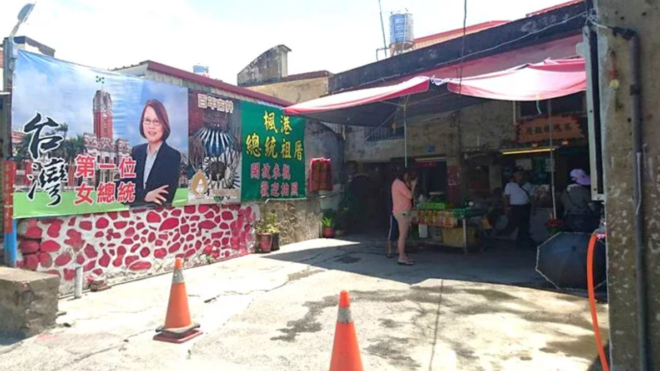
Fangshan Township in Pingtung County, the Fenggang area, is the hometown of President Tsai Ing-wen. For two consecutive elections, Tsai chose to start her final nationwide campaign sweep from her hometown. She initially won by a nine-to-one margin in her hometown constituency, which later slipped to seven-to-three. In the current term, the responsibility was handed over to the Lai-Xiao and Hou-Kang pair, with a six-to-three ratio. Local residents observe that, despite being branded as the ‘President’s hometown,’ this remote farming and fishing village still remains gloomy and unchanged, and the loss of votes is not without reason.
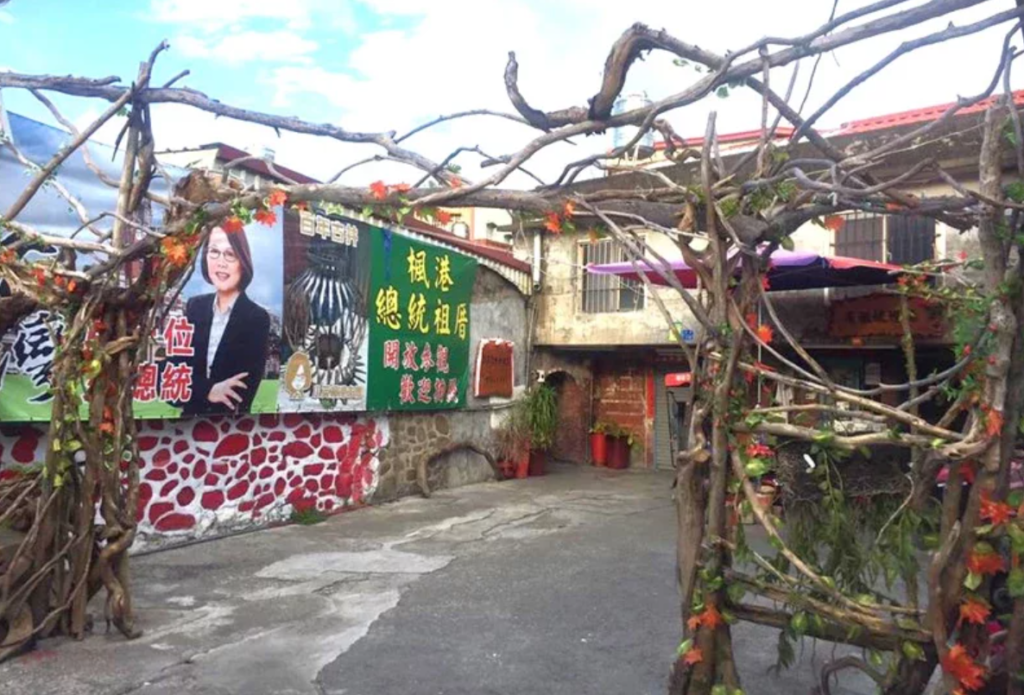
Tsai Ing-wen’s ancestral home in Shanli Village, Fangshan Township, is a nearly century-old two-story brick building. Tsai Ing-wen’s father left his hometown for Taipei at the age of 18.
Tsai, the eleventh child, was born in Taipei and often returned to her hometown with her father for ancestral worship, staying in a local small hotel, just a street away from Fenggang Village, which actually has it’s own charm (in my opinion), and you can read about Fenggang’s charcoal and Chinese Chastetree Broom here. Also, check out our VR 360°content for Fenggang – Fenggang Fishing Port, and Fenngang Wave Point.
Tsai Ing-wen’s ancestral home in Shanli Village, Fangshan Township, is a nearly century-old two-story brick building. Tsai Ing-wen’s father left his hometown for Taipei at the age of 18. Tsai, the eleventh child, was born in Taipei and often returned to her hometown with her father for ancestral worship, staying in a local small hotel, just a street away from Fenggang Village.

Tsai Ing-wen not only started her final nationwide campaign sweeps from her hometown for two consecutive elections but also arranged to distribute red envelopes there during the Lunar New Year, which was interrupted due to the pandemic.
Fangshan Township’s Fenggang area is a traditional farming and fishing village with a total population of about 2,000. In Tsai’s first presidential election, she won in the district with a nine-to-one margin over the opposition party, which slipped to seven-to-three in the last term. This term, the responsibility was handed over to Lai Ching-te, with the Lai-Xiao and Hou-Kang pairs dropping to six-to-three, and the Ko Ying pair at about ten percent. Tsai’s supporters in the village noticed that although her votes have decreased over the terms, she still maintains support from over half of the people, not letting the ‘daughter of Pingtung’ down. However, some villagers noted that with the addition of the Ko Ying pair, it was predicted to be worse than the last term.
Local people pointed out that Fenggang produced Taiwan’s first female presidential candidate, which brought a sense of pride to the villagers. The ancestral home district initially had an impressive nine-to-one victory in her first term.
Two adjacent ancestral houses, one rented by the township office and the other by the family for public visits, displaying old photos and artifacts of the Tsai family.
However, the fervor for visiting the ancestral home cooled down after her first term, with the iron gates pulled down. Despite a few more tourist signs, the continuous loss of the younger population and the desolate and narrow old streets and lanes remain unchanged, not transformed by the fame of being the ‘President’s hometown.
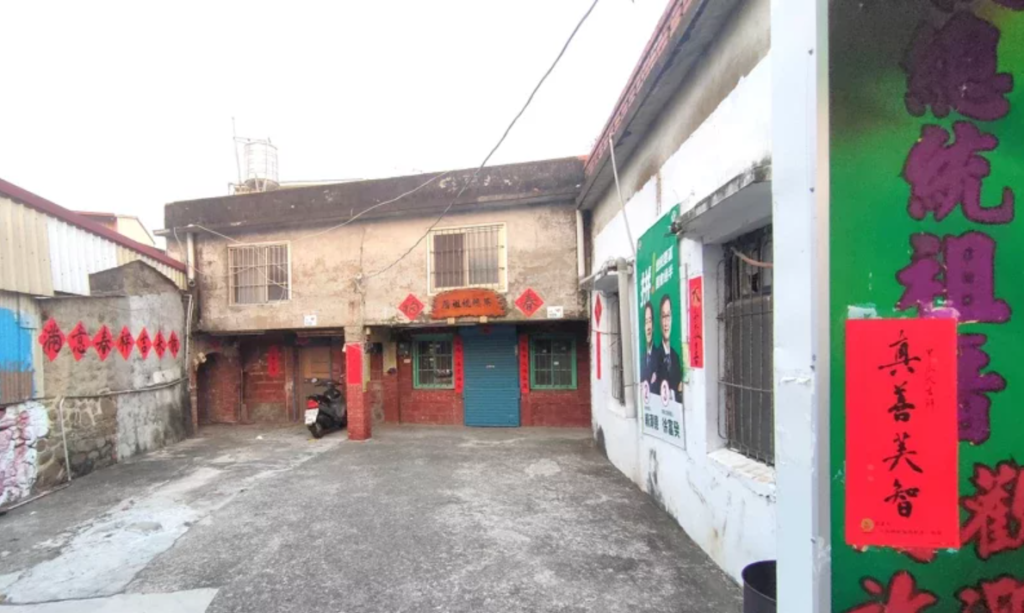
‘From the initial enthusiasm of visiting the President’s ancestral home in her first term to the return to quietness after the hype, we didn’t feel the caring gaze!’ a villager surnamed Wu said.
Tsai Ing-wen’s first term attracted a large number of fans for pilgrimages, with bustling traffic and vendors. The community-designed tours included visits to the ancestral home, community building points, and ecological tours with guides.
Initially, this boosted tourism, but it soon died down. The locals had hoped that the second term would reignite interest in local tourism, but as two terms are almost over, the quietness remains. The villagers’ sentiments are naturally reflected in the votes.”