
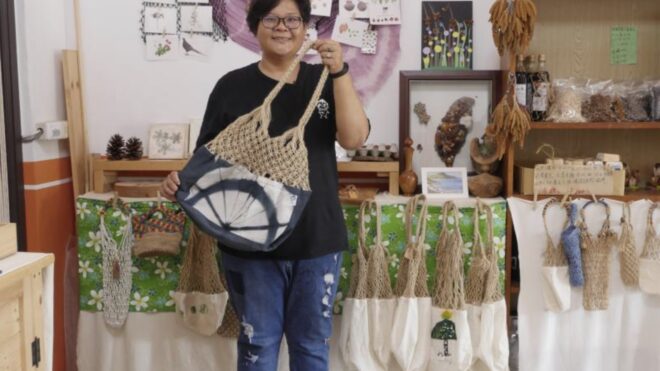
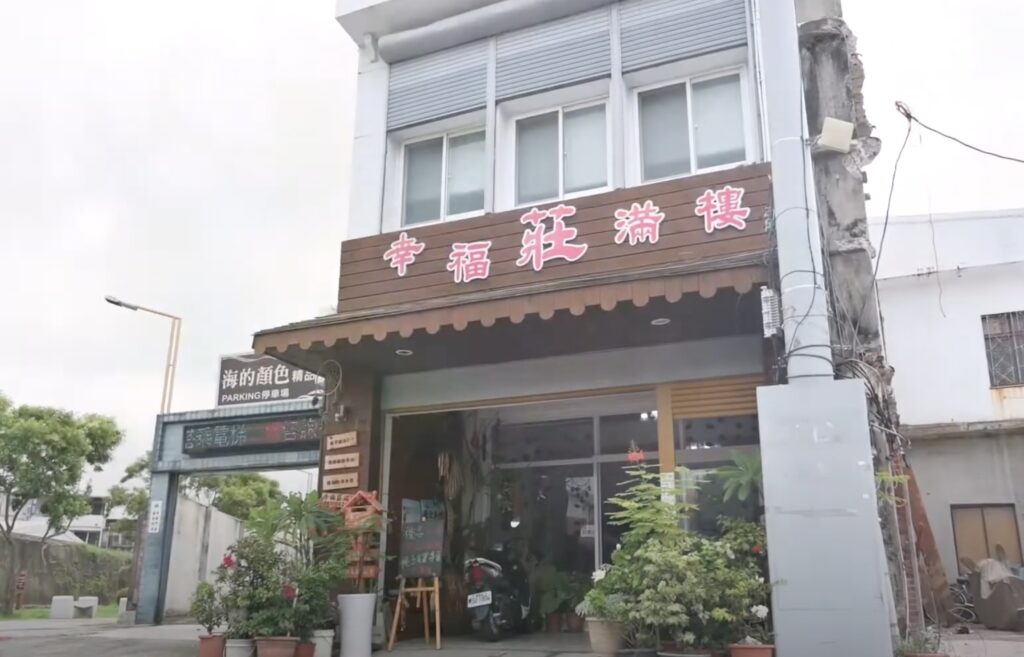
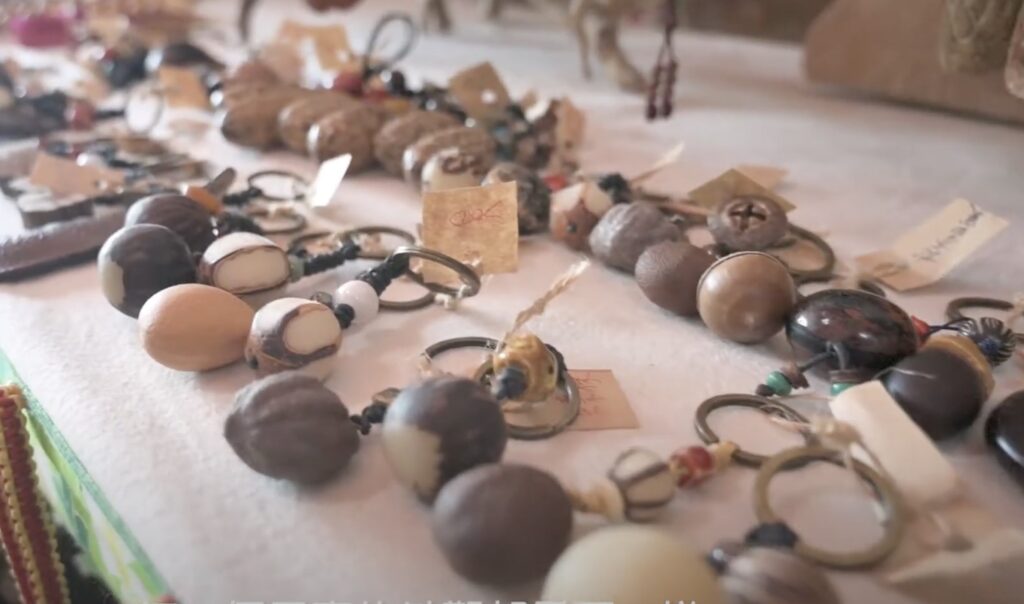
The workshop specializing in sisal weaving is led by the owner, Wang Meiyou 王美又, who is a student at the Checheng DOC. After participating in many digital courses and learning that the DOC could help market her products, she actively invited everyone to her studio for practical hands-on smartphone photography. Inside the Yixin Handicraft Workshop, numerous finished products are displayed, including sisal-woven bags, seed ornaments, and stone necklaces.
Each piece has its own unique and enchanting characteristics. The instructor guided everyone in learning composition, depth of field, and close-up techniques. The materials photographed were then post-processed and edited to create unique artisanal videos for the shop.
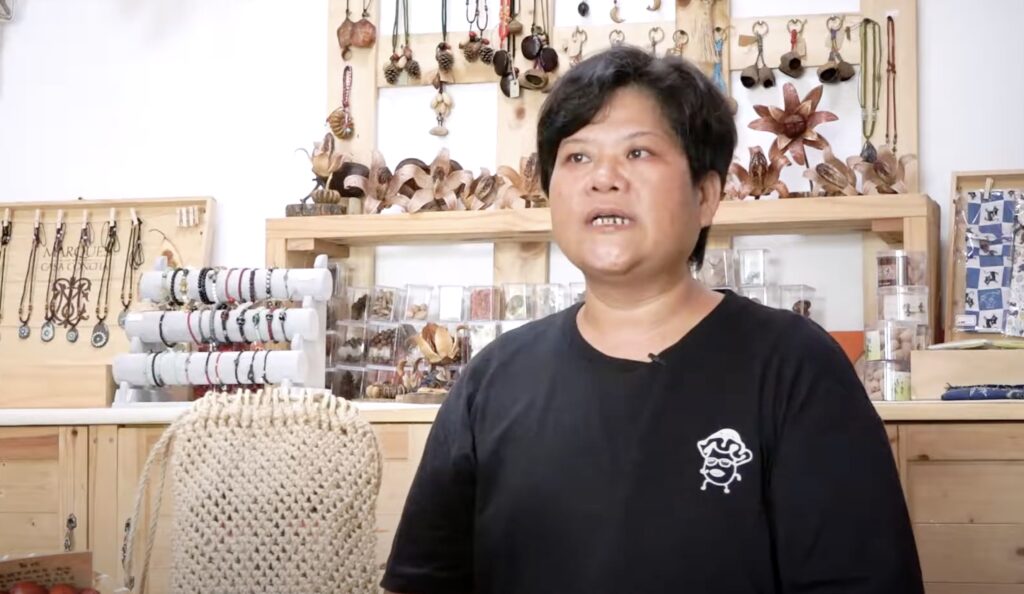
Wang Meiyou 王美又
Sisal was a prosperous industry on the Hengchun Peninsula during the 1930s and 1940s but began to decline with the advent of nylon. However, the cherished memories of working with her father in the sisal fields stayed with Wang Meiyou. Driven by her attachment to the land, she was inspired to create with sisal. A fortunate opportunity led her to open a craft course, which, to her surprise, generated a lot of interest. This encouragement gave her the confidence to slowly build up her studio’s energy, eventually deciding to quit her day job and wholeheartedly pursue her passion for handcrafting with sisal.
Mrs Wang says, “Actually, my idea is quite simple, which is to let those who appreciate art come in. There was a chance that led me to open the first class, and many people came to participate in this hand-weaving course. Gradually, I gained confidence and thought about quitting my original job to focus fully on handicrafts.”
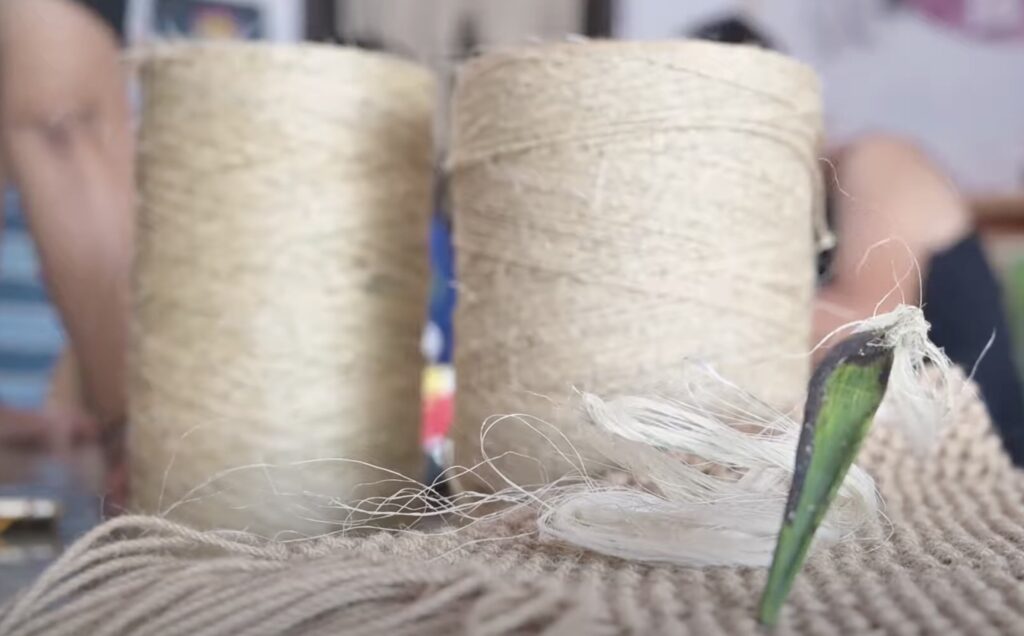
As we already talked this article, sisal was the green gold industry of the Hengchun Peninsula in the 1930s and 1940s, which slowly declined after the rise of the public’s preference for other materials. You can visit Sisal Factory Ruins in the region, to have a feel about this.
Mrs Wangs says: “I slowly started to use this sisal to create because of the connection to the land. What I weave might turn out to be a piece, maybe a green potted plant classroom, or a handbag. But in contrast, I want to incorporate it into my creative medium, also because I want to promote the concept of environmental protection.”
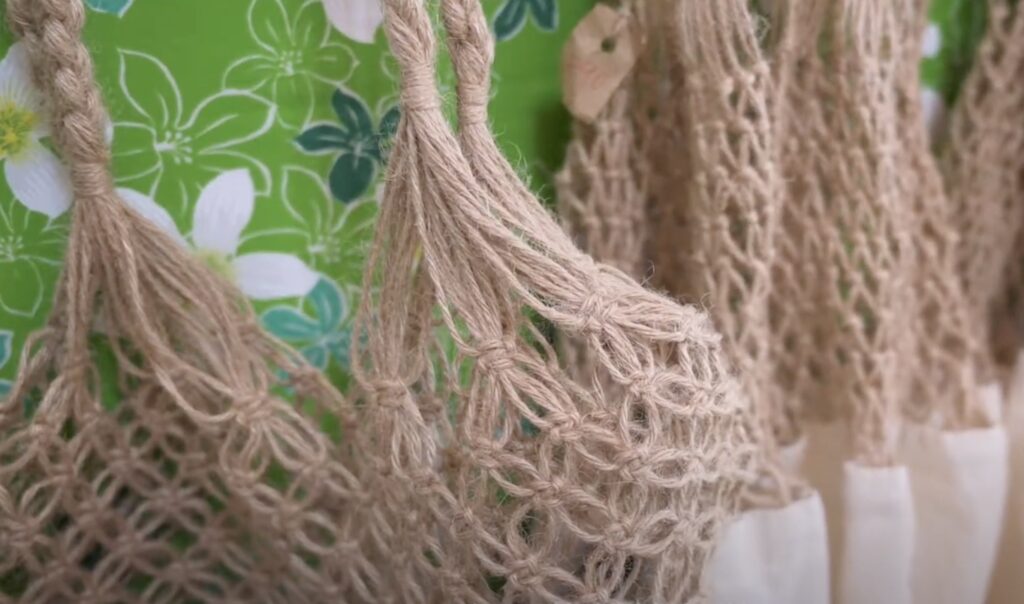
She adds, that: “We can also tell everyone to reduce the use of disposable plastic products. Actually, I’m a seed enthusiast; we’re far from the urban areas, close to the sea, and the fruits I collect or pick up are mostly based on memories.”
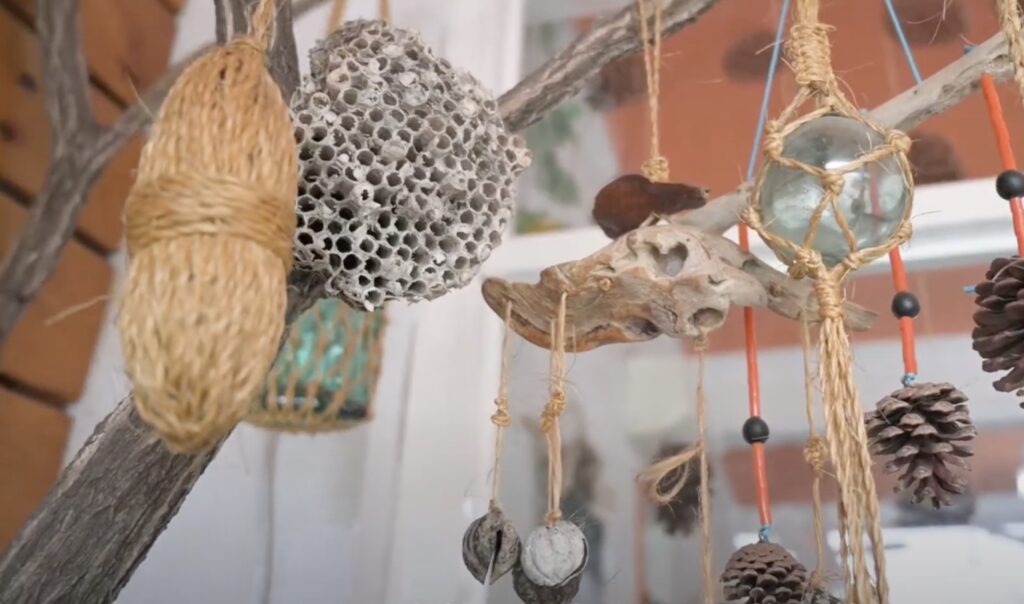
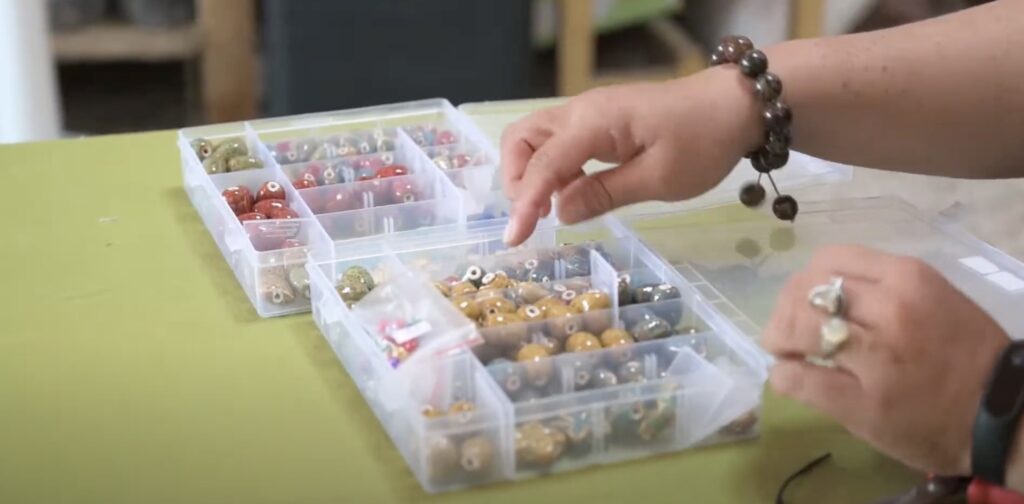
I feel that the appearance of seeds is very beautiful, each fruit looks different, and their uniqueness varies too; they can also be made into key rings or necklaces, which I think are beautiful to wear, says Wang.
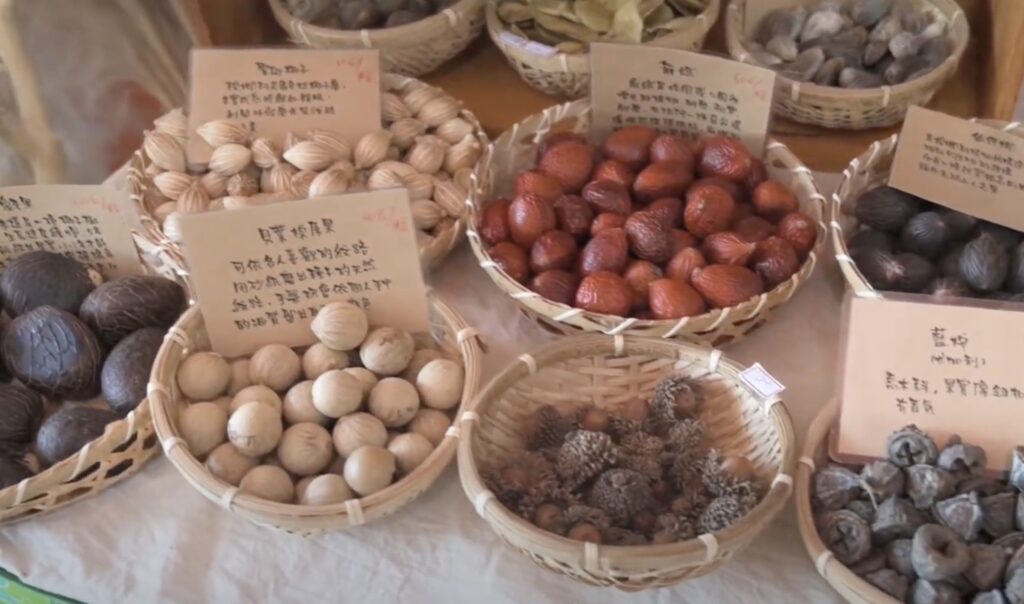
In my workshop, I have launched courses, and I often tell customers, ‘What you see, I can teach you.’ It can be a key ring or a handbag weaving, and I will ask the students or tourists to choose for themselves.
But if you have the chance or opportunity to come to the Hengchuns Tougou Village, you could use your spare time to have this experience, and also give yourself a chance to feel the emotion tied to sisal through weaving.