
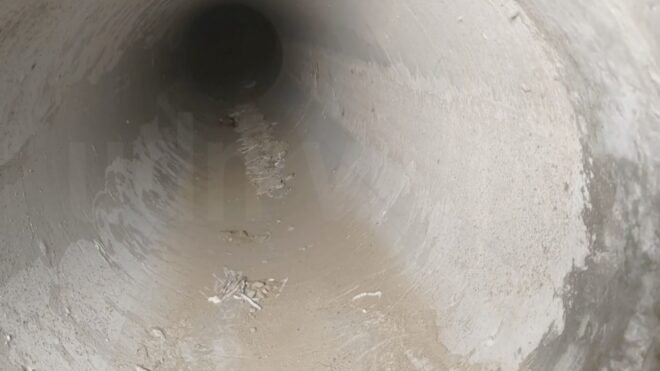
With the highest land crab diversity, Kenting National Park has been arranging three rounds of traffic management along the Route 26 section from Banana Bay to Shadao (Sand Island) for the past 12 years.
This prevents gravid female crabs from being fatally hit while crossing the road to release their offspring by the coast.
This year, in addition to these measures, the Highway Bureau has introduced the nation’s first-ever biological corridor designed to facilitate land crabs’ movement. The first phase of this initiative concluded last night. The public has been curious whether the newly built 60-million-dollar corridor would effectively aid the land crabs’ journey. The observation team has reported sporadic land crab crossings in recent days, which has eased concerns for the Highway Bureau.
The coastal forests of Kenting National Park serve as an excellent habitat and breeding ground for land crabs. Scholars’ investigations have revealed that there are over 30 species of land crabs in this area. Not only does this make it the most diverse population in Taiwan, but it also ranks highly on a global scale among similar habitats.
To mitigate the threat of gravid female crabs being fatally hit while crossing the road to release their offspring by the coast, a “stop for 10 minutes, then proceed for 10 minutes” traffic management strategy has been implemented during full moon nights this year.
The first round of this strategy took place from August 1st to 3rd along Route 26 from Banana Bay to Shadao – Sand Island. Additionally, this year, the Highway Bureau has constructed underground corridors in two hotspots along Route 26, with 184 culverts and pipes designed to facilitate land crab crossings.
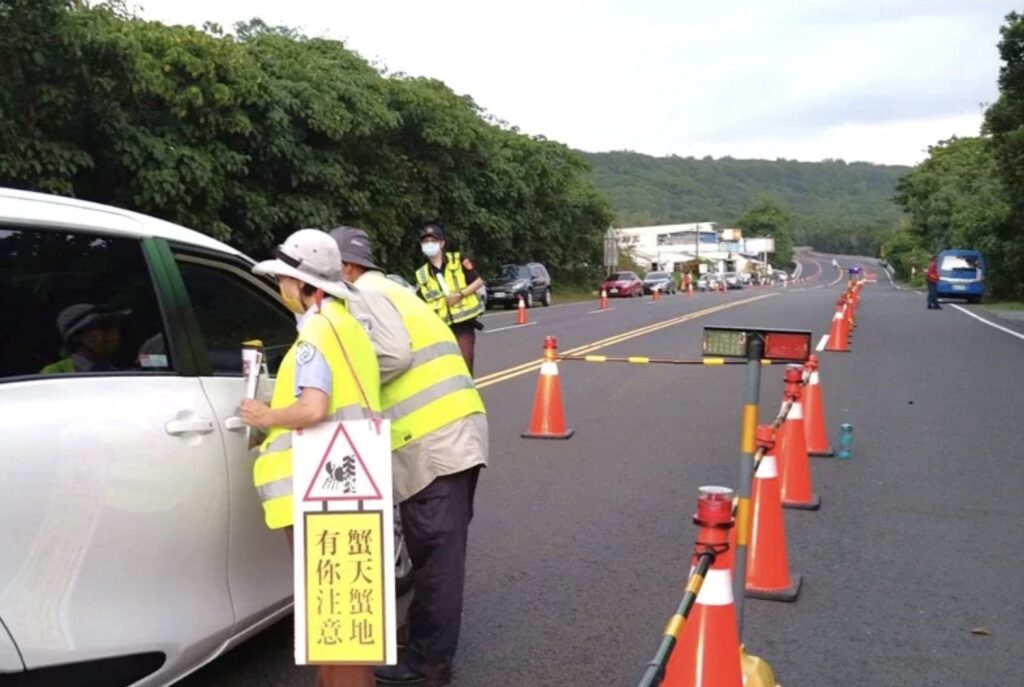
The prevention of roadkill incidents involving Kenting land crabs has become a prominent topic in recent years due to the concerns of environmental groups and scholars. The effectiveness of the underground corridor, which the Highway Bureau has invested 60 million NT dollars to construct this year, has drawn considerable attention. The Highway Bureau has commissioned the Department of Life Sciences at Dong Hwa University to investigate the corridor’s usage rate.
Additionally, land crab scholar Li Zhengzhang was asked to conduct phototactic experiments. According to the research team from Dong Hwa University’s Life Sciences Department, the internal surface of the culverts and pipes designed for crab passage is rough, and the entrance is constructed at an angle of approximately 45 degrees to facilitate the crabs’ entry. Observations over the past few days have shown a small number of crabs passing through, which is encouraging. However, this is still in the initial observation phase, and further data accumulation through extended monitoring is necessary.
Observations over the past few days have shown a small number of crabs passing through, which is encouraging.
Scholar Liu Hongchang 劉烘昌, who has conducted long-term research on Kenting land crabs, mentioned that these crabs face threats to their survival such as habitat destruction due to human development, roadkill incidents involving gravid female crabs crossing to release their offspring, and attacks from invasive yellow crazy ants.
In recent years, the Kenting Administration has been overcoming these challenges step by step. During traffic management hours, the cleared road sections have shown a certain level of protective effect, resulting in a roadkill mortality rate of less than ten percent. This approach ensures the safe passage of hundreds of gravid female crabs each night. While the elevated road surface presents practical difficulties, underground corridors are one possible solution. However, their effectiveness is still under observation.
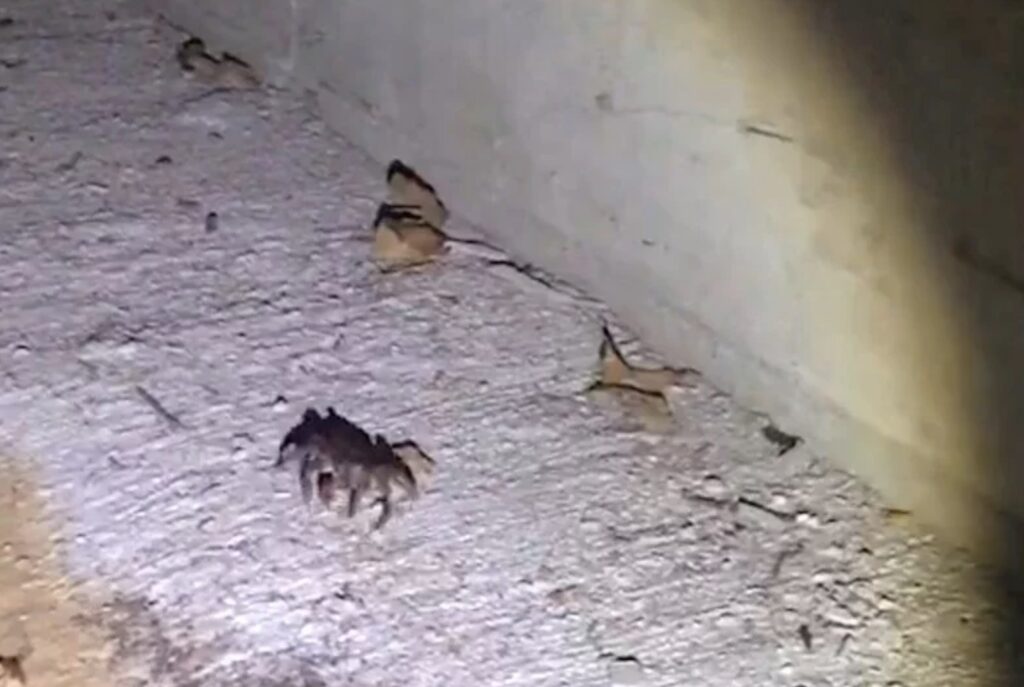
Female crab is seen passing through the 60Million NTD tunnel in Kenting
Environmental groups believe that the effectiveness of the Highway Bureau’s creation of the nation’s first land crab biological corridor still needs verification. While this is addressing an immediate issue, the ultimate solution lies in elevated roads or rerouting the section from Banana Bay to Sand Island.
This would return the coastal forest habitat to the land crabs. The Highway Bureau’s Third Engineering Office stated that, apart from establishing an experimental land crab corridor and conducting continuous rolling evaluations and adjustments, they will also invest 12 million NT dollars in outsourcing a long-term monitoring and improvement study from Sail Rock to Sand Island. This study will explore options such as rerouting, elevated roads, and reducing the four-lane road to two lanes, with a planned completion date set for the following year.