Last year, the Ocean Conservation Commission intended to amend the “List of Protected Marine Wildlife Species” and include seven species of giant clams as precious and rare protected marine wildlife in Taiwan.
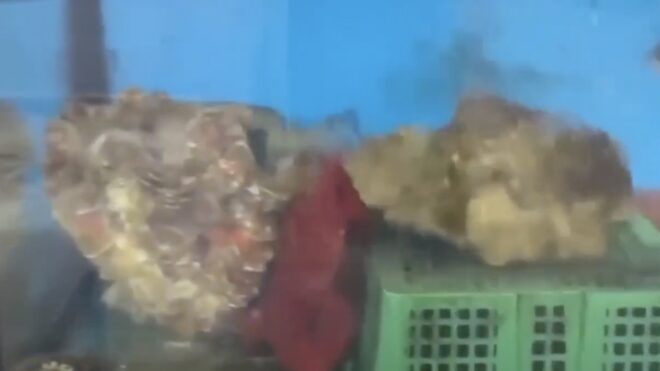
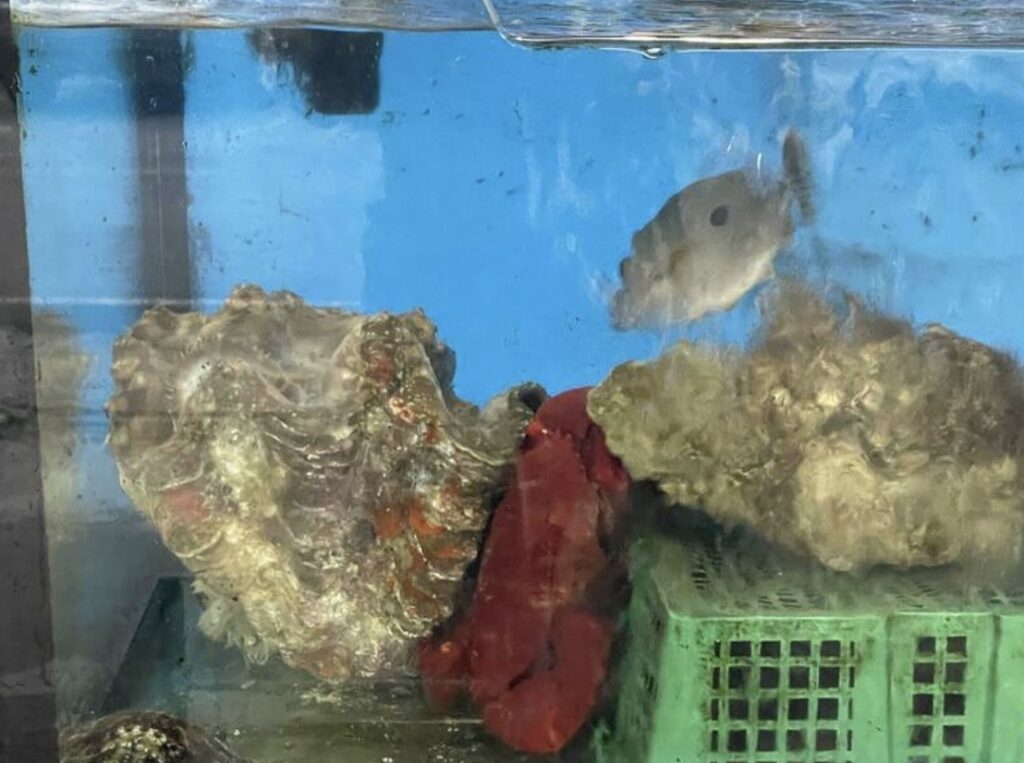
However, the final announcement did not pass, and recently, visitors discovered that a seafood store in a private seafood area on the west coast of Kenting was directly displaying and selling wild “giant clams.”
Outraged by this discovery, they lodged a complaint with the Kenting National Park Management Office (referred to as the Park Management Office). After an investigation by the Park Management Office, the business admitted that the clams had already been sold. Currently, there are no legal penalties for such actions, so the only course of action is to advise the public to protect marine ecology.
“Isn’t snorkeling all about seeing these creatures?” expressed an indignant visitor named Xiao Ming.
Based on a friend’s recommendation, he visited this relatively less crowded seafood store area. Still, to his surprise, he found two giant clams measuring about twenty centimeters being sold in a water tank at the store entrance.
Evidently, these clams were locally sourced from the Hengchun Peninsula, which was disheartening and distressing. Xiao Ming hopes that the relevant authorities can end such exploitative practices.
The Park Management Office, upon receiving the report, conducted an inspection at the seafood store. The owner admitted that the giant clams had already been sold.
According to the current conservation regulations, the giant clams were not officially listed as protected species after last year’s announcement.
Although harvesting is prohibited within national parks, the “National Park Act” 國家公園法 stipulates that penalties can only be imposed if the harvesting occurs locally.
With the disappearance of physical evidence, it is no longer possible to provide evidence, and the only course of action is to advise the business not to illegally sell organisms harvested from the national park’s marine areas.
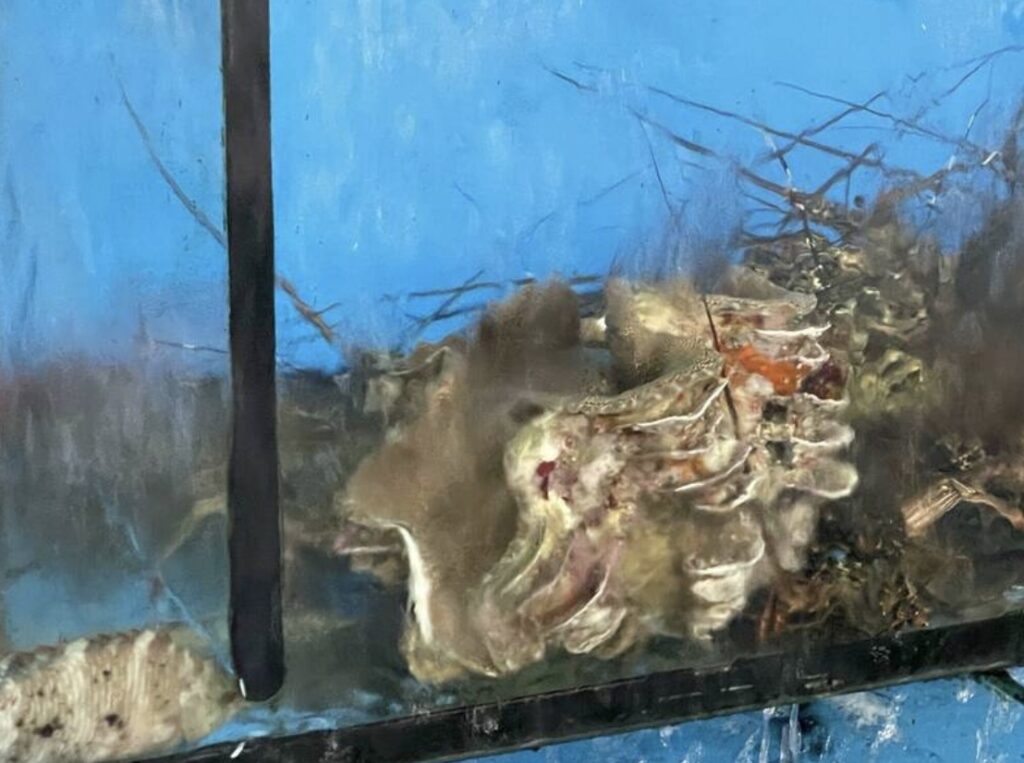
The giant clam, also known as the “The Gem of the Sea.” can grow to over one meter in size. However, its growth rate is slow, with a maximum annual growth of about three centimeters.
It is most commonly found in the Indian Ocean and the Pacific Ocean. Along with pearls, corals, and amber, it is revered as one of the “Four Great Organic Gemstones” in the Western world.
If stolen and brought into restaurants, the clam meat may fetch a few thousand dollars, while the shells are used as artistic decorations.
However, when alive in their natural habitat, they attract scuba divers, bringing in incalculable tourism revenue. In recent years, there have been occasional cases of illegal harvesting in Kenting, which is on the brink of extinction.
It is listed in Appendix II of the Convention on International Trade in Endangered Species of Wild Fauna and Flora (CITES).
Only the Penghu County Government and the Taitung County Government have banned the harvesting of giant clams, and a few other counties or protected areas have management regulations for giant clams.
According to the current regulations of the "Wildlife Conservation Act," if a species is listed in the "List of Marine Protected Wildlife," it is prohibited to capture, buy, sell, display, exhibit, possess, import, export, or engage in breeding activities. However, despite the announcement of the amendment by the Ocean Conservation Administration on May 23rd last year, it was ultimately not included.

Giant Clam alive in the ocean in Kenting
Update June 10, 2023: Could this be the same giant clam stolen earlier in Houbihu?