
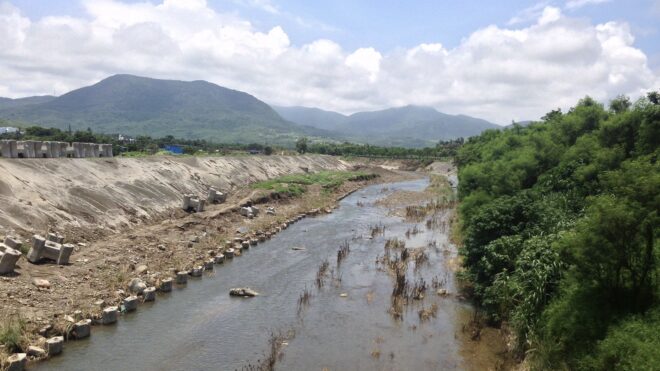
Baoli River is located about 1 kilometer south of Checheng, under the bridge not far from Sheliao Elementary School.
Many intertidal crabs are busy picking up organic debris and microorganisms on the muddy bank at low tide.
In addition to some common crabs in Taiwan, such as Hemigrapsus penicillatus, Chiromantes haematocheir, Chiromantes dehaani, and Macrophthalmus japonicus, there are also some rare species, such as Metopograpsus frontalis, Helice narrowi, and Sesarmops intermedius.
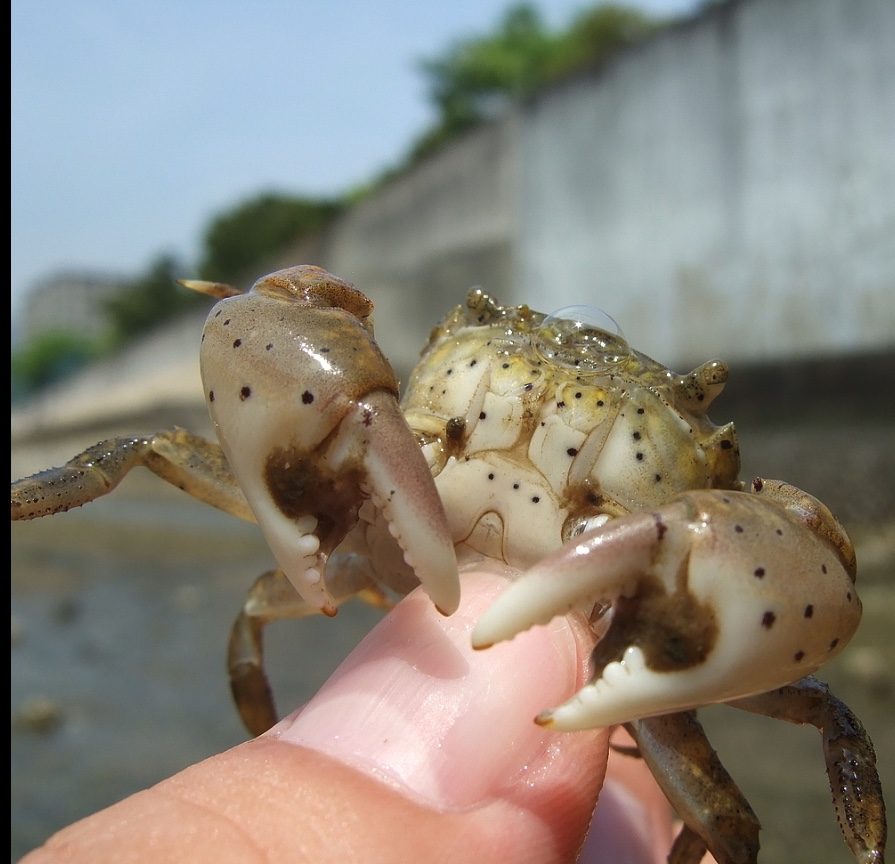
Hemigrapsus penicillatus
Hemigrapsus penicillatus, also known as the brush-clawed shore crab, is a species of crab commonly found along the coastlines of the Pacific Ocean, including in Kenting National Park in southern Taiwan.
These crabs are typically found in rocky intertidal zones and estuaries, where they feed on a variety of small organisms such as algae, mollusks, and other invertebrates. They have a distinct brush-like structure on their claws, which helps them to clean and maintain their gills.
In Kenting, Hemigrapsus penicillatus is one of the many species of crabs found along the coastline. Visitors to the park may be able to observe these crabs during low tide, when they can be seen foraging for food on the muddy banks of creeks and estuaries.
It’s important to note that visitors should not disturb these crabs or any other wildlife in the park, as it can have negative impacts on the ecosystem.
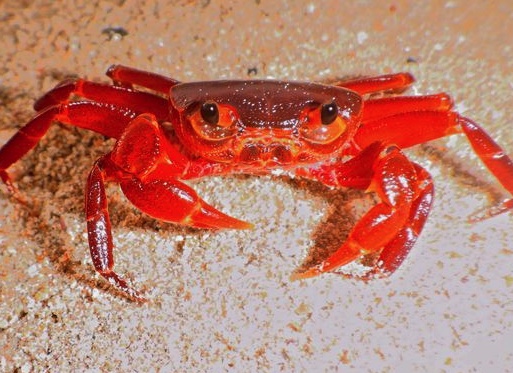
Chiromantes haematocheir
Chiromantes haematocheir, commonly known as the red-clawed crab, is a species of freshwater crab that is found in the streams and rivers of Kenting National Park. This crab is also commonly found in other parts of Asia, such as China and Japan.
The red-clawed crab is a medium-sized crab, with males growing up to 4cm in carapace width, while females tend to be slightly smaller. They are characterized by their bright red claws, which are used for defense and foraging.
These crabs are typically found in freshwater habitats, such as streams and rivers, such as Baoli river in Kenting and they are particularly common in areas with rocky substrate and dense vegetation. They are omnivorous, feeding on a variety of food sources such as algae, detritus, and small aquatic organisms.
In Kenting National Park, the red-clawed crab is an important part of the freshwater ecosystem, serving as both predator and prey. They play an important role in controlling populations of small aquatic organisms and in the nutrient cycling of freshwater habitats.
As with all species in the park, visitors are encouraged to admire the red-clawed crab from a distance and to avoid disturbing their natural habitat.
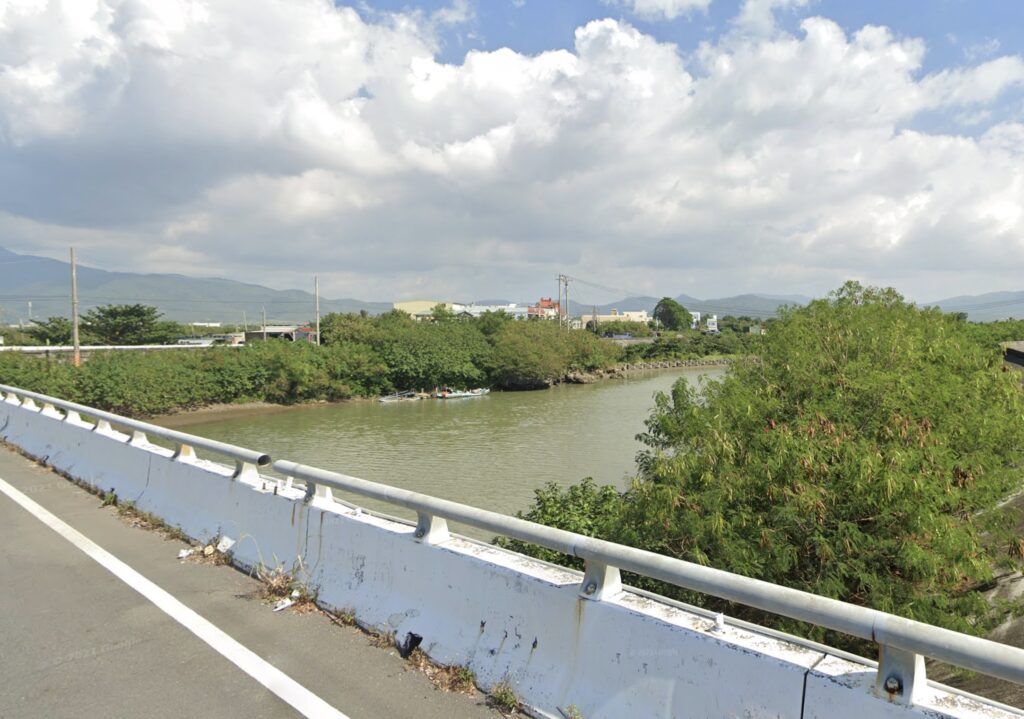
Bridge over Baoli river in Chengcheng Township
Chiromantes dehaani, commonly known as the “mangrove crab,” is a species of crab found in the mangroves and estuaries of Kenting and other coastal areas of Taiwan.
These crabs are usually small, with a carapace width of up to 3 centimeters. They have a dark brown or reddish-brown carapace with yellow spots or lines. Their claws are relatively long and slender, with a reddish tint. They have a flattened body shape that allows them to move easily through the dense roots and mud of mangrove forests.
Chiromantes dehaani are known for their strong ability to climb trees and mangrove roots. They are typically found in areas with dense vegetation and shallow water, where they feed on small invertebrates, algae, and detritus.
Like many other mangrove species, Chiromantes dehaani play an important role in the ecosystem, as they help to break down dead plant material and recycle nutrients. They are also a food source for larger predators, such as birds and fish.
However, like other species that depend on mangrove habitats, Chiromantes dehaani is threatened by habitat loss and degradation. Mangrove forests are often cleared for development or aquaculture, leading to the loss of vital habitat for these crabs and many other species. Conservation efforts are underway to protect and restore these important ecosystems and the species that depend on them.
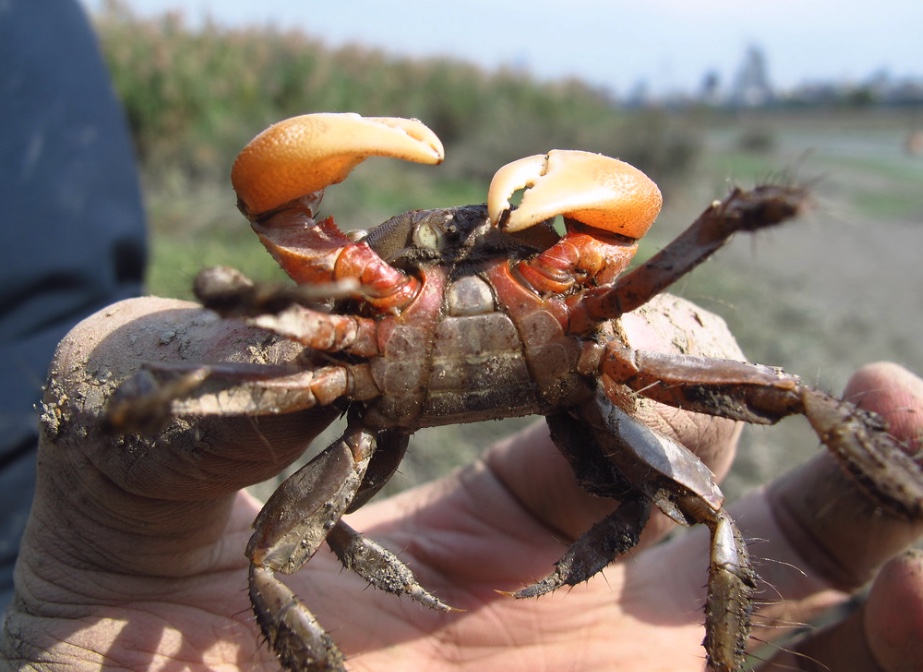
Chiromantes dehaani
Macrophthalmus japonicus is a species of crab found in the intertidal zone along the coasts of Japan, Korea, and China, including the waters around Kenting. This species of crab is easily recognizable by its large eyes, which are situated on stalks that can be up to four times the length of the carapace. The carapace of Macrophthalmus japonicus is olive-brown or greyish-brown, with a finely granulated surface.
These crabs are active during the day and are often found on sandy or muddy substrates in the intertidal zone, where they burrow into the sediment to hide from predators or to escape from the heat of the sun. They are omnivorous and feed on a variety of prey, including small invertebrates, algae, and detritus.
Macrophthalmus japonicus is an important food source for humans and is also used as bait for fishing. However, overfishing and habitat destruction have caused declines in their populations in some areas. In Kenting, it is important to respect the local regulations regarding fishing and to avoid disturbing the habitats of these crabs to help ensure their continued survival.
Metopograpsus frontalis, commonly known as the low-shore crab or broad-fronted crab, is a species of crab that can be found in the intertidal zones of rocky and sandy shores, as well as estuaries, along the coasts of the Indo-Pacific region, including Kenting National Park in Taiwan.
The carapace of Metopograpsus frontalis is roughly square-shaped and can reach up to 3 cm in length. It is often covered in fine, short hairs, which gives it a velvety appearance. The color of the carapace can vary from light brown to olive green or gray, with darker markings.
Metopograpsus frontalis is a herbivorous crab, feeding mainly on algae, but also on detritus and other small organisms. It is an important part of the intertidal ecosystem, as it helps to control algal growth and nutrient cycling.
In Kenting, Metopograpsus frontalis can be found in the intertidal zones of rocky shores, particularly in areas with a lot of algae. They are most active during low tide, when they scuttle across the rocks and feed on algae. However, like many intertidal organisms, they are vulnerable to disturbance and pollution, so it is important to treat their habitat with care and respect.
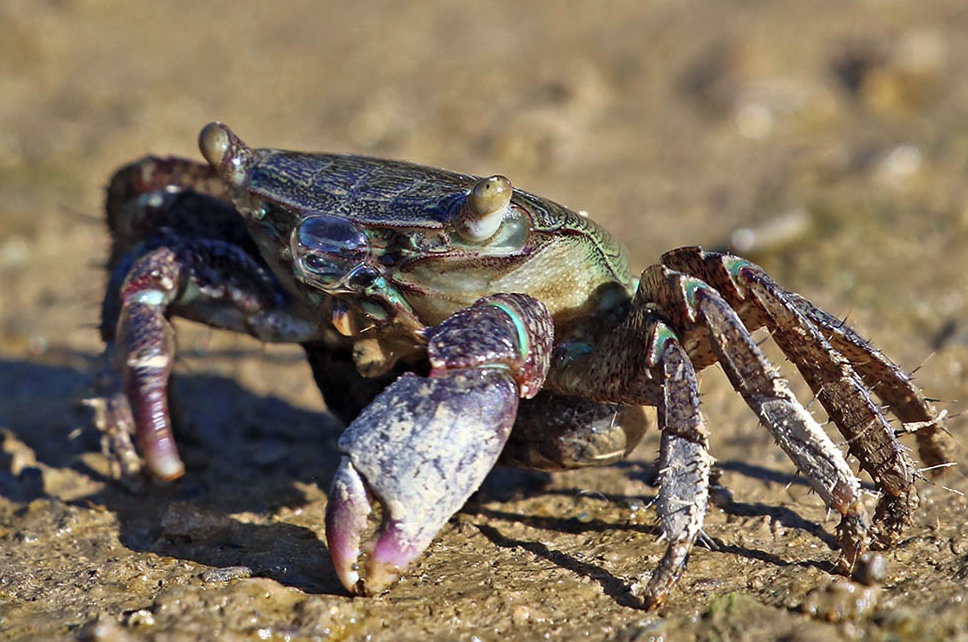
Metopograpsus frontalis
Helice narrowi is a species of crab found in the rocky intertidal zone of Kenting. It belongs to the family Varunidae, which includes many species of crabs commonly known as “fiddler crabs”. Like other fiddler crabs, H. narrowi has a distinctive morphology in which the male possesses one greatly enlarged claw that it uses to attract mates and communicate with other males.
H. narrowi is a relatively small crab, with males measuring up to about 2 cm in carapace width and females slightly smaller. It has a brownish-red carapace, and its legs and claws are slightly lighter in color. It feeds mainly on small organisms such as algae, plankton, and detritus, and is typically found in rocky intertidal areas with strong wave action.
The reproductive behavior of H. narrowi is similar to that of other fiddler crabs. Males attract females by waving their large claws in a distinctive pattern, while also defending their territory from other males. Females lay their eggs in burrows in the sand or mud, and the larvae hatch and develop in the water column before eventually settling to the bottom as juveniles.
H. narrowi is an important part of the rocky intertidal ecosystem in Kenting, as it serves as both predator and prey to a variety of other organisms. It is also a popular species for researchers studying the behavior and ecology of fiddler crabs.